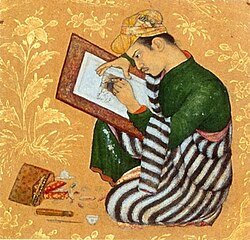
Abu al-Hasan (also Abu'l-Hasan; c. 1589 – c. 1630) was a Mughal painter of miniatures who worked during the reign of Jahangir. According to the reference, he came from Delhi and was the son of the artist Aqa Reza Heravi, who was from Herat in Safavid Iran, a city with a strong artistic tradition. His father was already employed by Jahangir before the prince became emperor, and the young painter grew up in that circle and was valued by the emperor. His work shared features with his father's, including Dutch and English influences, but Jahangir judged it to be of higher quality, comparable to that of earlier masters. In 1618 he bestowed on him the title Nadir-uz-Saman ("Wonder of the Age") for his work on the frontispiece of the emperor's memoirs.
His main task was recording events at the imperial court, which produced many portraits, a genre that defined Jahangir's rule. Few of his paintings survive, but those that identify him as the artist show everyday scenes and political images that presented the emperor and the empire in a favourable light. Besides original works, he also retouched paintings by other artists, such as the Dancing Dervishes, originally by Aqa Mirak. His career followed the development of Mughal style, but after Jahangir's reign ended and Shah Jahan took power, his activity declined, and from 1628 there is no evidence of new works by him.
His legacy is mainly that of a court portraitist who helped shape the naturalism of seventeenth-century Mughal painting.
Works (2)
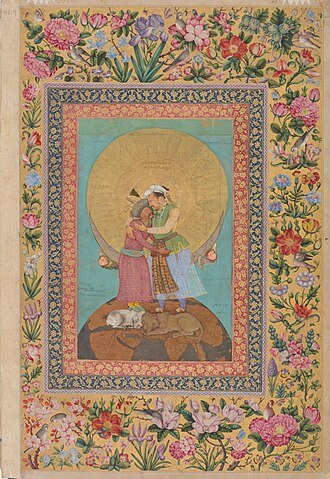
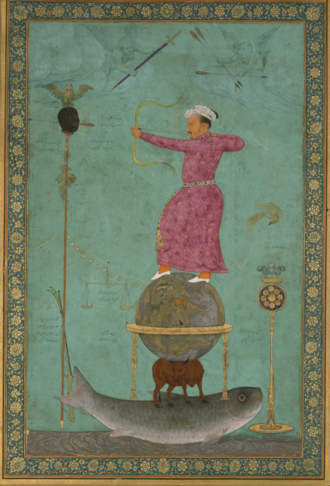
Where to see the work
- Freer Gallery of Art Washington, D.C. · 1
Curiosities
Dancing Dervishes
This page, included in the Shah Jahan Album, was originally painted by Aqa Mirak. Abu al-Hasan later retouched it, showing that his skill was also used to improve the work of others. It is an example of how court workshops could rework the output of other masters, which now complicates the attribution of some folios.
Wonder of the Age
The title Nadir-uz-Saman was granted in 1618 for the work on the frontispiece of Jahangir's memoirs. According to the sources, the emperor declared that he had no equal among painters, an opinion that reveals how highly he was valued within the court.
A Saint After a European Model
A study of Saint John the Evangelist is adapted from Dürer's 1511 engraving of the Crucifixion. Dated 1600 to 1601, it is held at the Ashmolean Museum in Oxford and shows that the painter drew on European prints as a source.