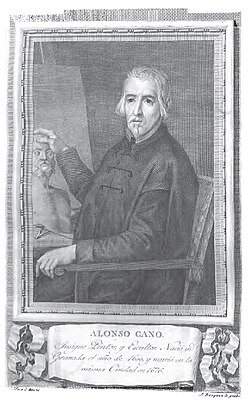
Alonso Cano (Granada, 1601–Granada, 1667) was a Spanish Baroque painter, sculptor and architect. He is regarded as the founder of the Granada school of painting, and his influence spread across Andalusia and Madrid. His pupils included Sebastián Herrera Barnuevo, Pedro de Mena and José de Mora.
The son of a joiner of La Mancha origin, Cano first trained in his father's workshop, where he learned to draw patterns for choir stalls and altarpieces. The family moved to Seville in 1614, and in 1616 his father placed him under Francisco Pacheco, although Palomino later recorded that he also worked in the studios of Juan del Castillo and Francisco de Herrera the Elder. His earliest known oil painting is San Francisco de Borja (1624). In Seville he worked as both painter and sculptor, and in 1630 he tried to examine Francisco de Zurbarán as a painter, a request Zurbarán refused.
In 1637 the Count-Duke of Olivares summoned him to Madrid, and by the winter of 1638 he had settled at court, where he taught drawing to Prince Baltasar Carlos. Access to royal collections rich in sixteenth-century Venetian painting, and to the work of Velázquez, reshaped his style, moving it from the tenebrism he had inherited from Caravaggio toward a more colourful manner with elegant figures that sometimes recall Van Dyck.
His personal life was overshadowed in 1644 by the killing of his wife, found stabbed fifteen times. Cano was arrested and tortured, although he was never declared guilty. His legacy is twofold: as founder of the Granada school, and as an artist who moved between painting, sculpture and architecture with equal ease.
Works (11)
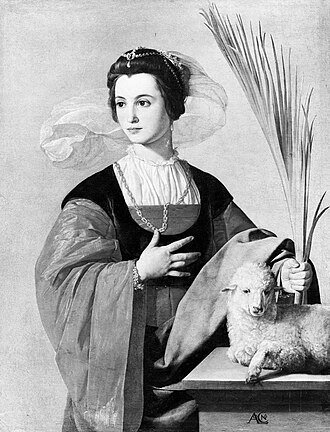
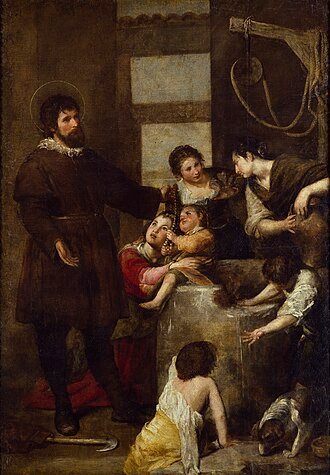
Religious painting by Alonso Cano, dated 1638 and executed in oil on canvas in a vertical format. Its central element is a fountain or well, around which the scene is arranged. With the available information, the specific episode depicted and the original commission cannot be established, so any more detailed reading requires consulting specialist studies.
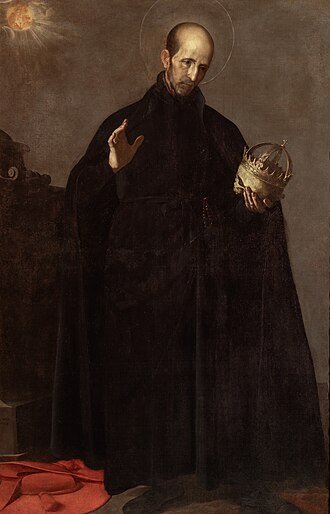
This canvas by Alonso Cano shows Saint Francis Borgia, a sixteenth-century Jesuit, in a full-length, large-scale upright composition. The record dates it to 1624 and classifies it as an oil painting on canvas with a religious portrait character. The available information does not clarify who commissioned it or the circumstances of its making, so it is best to stick to what can be seen in the work itself.
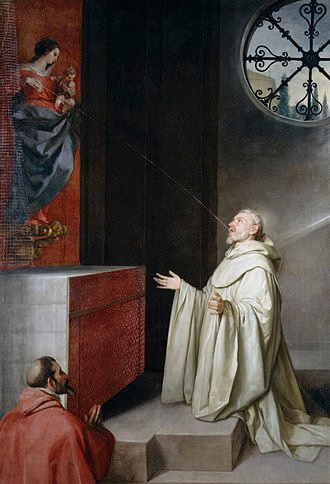
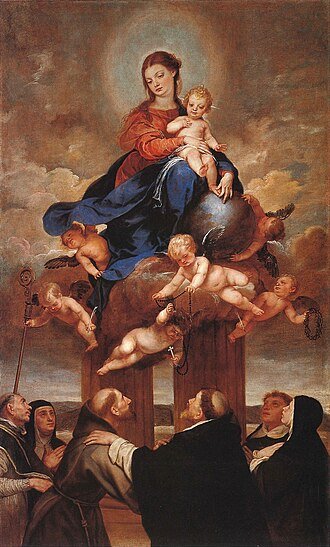
A religious painting from 1645, executed in oil on canvas. Its title places Saint Bernard and the Virgin in the scene, subjects common in seventeenth-century devotional painting. The work is listed as representing a sculpture, a detail to be treated with caution, as no further information about its commission or original setting is recorded.
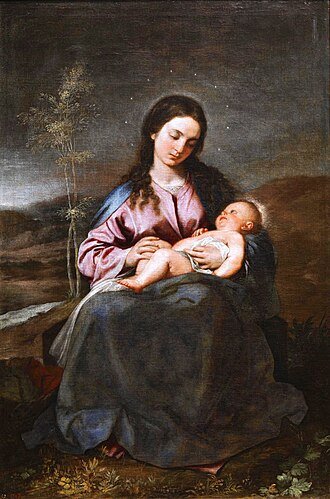
This Virgin and Child, painted in oil on canvas, shows Mary holding the infant Jesus within a religious subject. The record offers no details about its patron, commission or composition, so it is best to stick to what can be stated with confidence: the work belongs to the output of Alonso Cano and is held at the Museo del Prado.
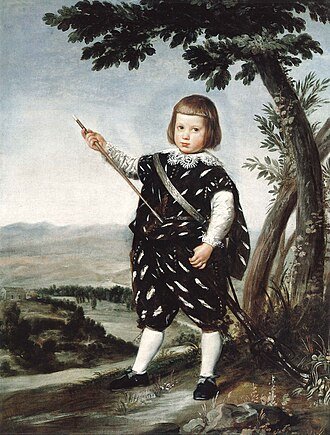
Portrait of Baltasar Carlos of Austria, heir to the Spanish monarchy, painted by Alonso Cano in 1633. The available information only allows us to describe the genre and technique: an oil on canvas portrait in upright format, showing the young prince with the formal dignity typical of court portraiture. Any detail that cannot be verified from the painting itself, such as the circumstances of its commission or its original reception, should be treated with caution.

This Annunciation, dated 1655 and painted in oil on canvas, depicts the moment when the archangel Gabriel announces to the Virgin Mary the news recorded in the Gospel of Luke. The scene belongs to the tradition of religious art, and a dove, a common symbol of the Holy Spirit, appears in it. The record offers no further details about its commission or composition, so any additional reading should be approached with caution.

The scene shows Mary and her cousin Elizabeth meeting, as in the Gospel account of the Visitation, with Zechariah and Joseph present. Alonso Cano painted it in oil on canvas in 1655. Beyond these details, the available information does not establish the commission or any firm symbolic reading of the composition.

Painted by Alonso Cano in 1655, this oil on canvas treats the religious subject of the betrothal of the Virgin Mary to Joseph of Nazareth. The scene focuses on the marriage between the two. Held at the Museo Goya, the record offers no further details about its commission or context, so it is best to describe only what the painting shows.
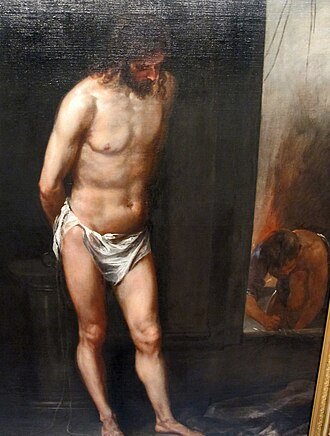
Painted in 1643 in oil on panel, this work shows Christ bound to a column, the scene of the Passion in which, according to the Gospels, he was scourged before his sentencing. It is a frequent subject in religious art, and the available records do not specify the commission or the later history of the painting.
Where to see the work
- Museo del Prado Madrid · 3
- Goya Museum Castres · 3
- Gemäldegalerie Berlin Berlin · 1
- Museo de Bellas Artes de Sevilla Seville · 1
- Museum of Fine Arts, Budapest Budapest district XIV · 1
- National Museum of Art of Romania Bucharest · 1
Curiosities
A Seville palace as a classroom
According to Ceán Bermúdez, Cano may have learned his style by studying the classical sculptures in the then palace of the dukes of Alcalá, today known as the Casa de Pilatos. This is the historian's attribution rather than a documented fact, so it should be read as a hypothesis. Even so, the Sevillian palace, with its collection of antiquities, shows the artistic environment in which the young painter moved during his years in the city.
An Italian painter accused
After the killing of his wife in 1644, the court gazetteer Pellicer y Tovar reported that a suspect was an Italian painter who lived in Cano's house and whom Cano allowed to copy his figures. The Italian then disappeared, and the authorities began to suspect Cano himself once they uncovered quarrels between the couple. The episode shows how the private lives of artists could become news in Madrid's court.