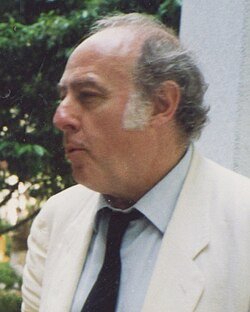
Eduardo Arroyo
1937–2018 · Spanish painter, sculptor and printmaker of narrative figuration linked to pop art
Eduardo Arroyo Rodríguez (Madrid, 1937-Madrid, 2018) was a Spanish figurative painter, a key figure of narrative figuration and associated with pop art. Exiled in Paris since 1958 because of his opposition to Franco, he also worked as a sculptor, printmaker and writer, although writing was his first vocation. His work matters for its ironic reinterpretation of Spanish clichés and for keeping figuration alive when abstraction dominated the Parisian scene.
After studying journalism and working as a caricaturist, he settled in Paris and began painting themes of the "black Spain", such as Philip II, bullfighters and dancers, treated in a caustic tone. His first public impact came in 1963 with Los cuatro dictadores, shown at the Third Paris Biennale, which provoked a protest from the Spanish government. In 1964 and 1965 he took part in the exhibitions that defined narrative figuration, where he presented the polyptych Vivir y dejar morir, or the Tragic End of Marcel Duchamp. His painting moved toward bright colours and smooth surfaces, with little spatial depth.
After being expelled from Spain in 1974, his recognition in the country came around 1982, when he received the National Prize for Plastic Arts. From the 1980s he extended his activity to theatre design and opera. His work is held by museums such as the Reina Sofía, the Pompidou and MoMA. His legacy lies in combining political criticism with irony about the art market and institutions.