Francesco Benaglio (Verona, c. 1432 - Verona, 1492) was a Renaissance painter active in Verona. Born Francesco di Pietro della Biada, the son of a grain merchant from Bergamo, he took the surname Benaglio from a noble Bergamasque family. His significance lies in renewing the local art scene during a period of crisis after the death of Pisanello, anticipating the full arrival of the Renaissance in the Veronese school.
His first known work is a triptych for the church of San Bernardino, now in the Castelvecchio Museum, which closely follows Andrea Mantegna's San Zeno altarpiece. Critics often judge its composition stiff and derivative, yet he also absorbed the newer Venetian trends of Gentile and Giovanni Bellini. Around the 1470s he painted works such as a Saint Jerome now in Washington, and several Madonnas marked by strong perspective and geometric rigidity.
In 1475 he was jailed for four months with another painter after painting obscene figures on the Palazzo Sagramoso at night. His legacy lies largely in his workshop: his son Girolamo inherited it, and Domenico Morone probably trained there.
Works (4)

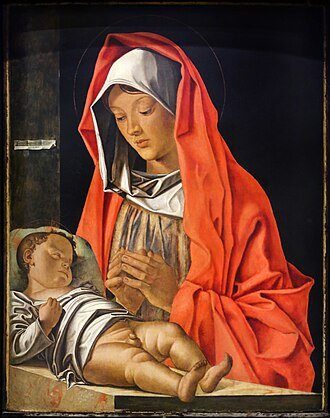

A religious work by Francesco Benaglio, painted in tempera on panel. It shows an angel, the Virgin Mary, Jesus of Nazareth and the Christ Child, figures common in traditional Christian imagery. The available record gives no further details about its date, commission or composition, so any additional claims would lack documentary support.
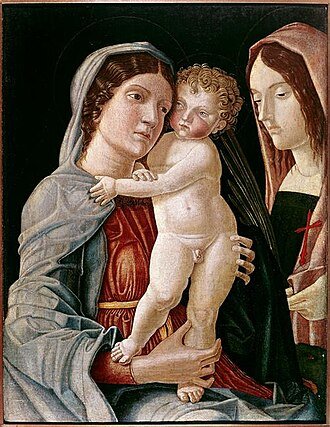
Where to see the work
- Castelvecchio Museum Verona · 4