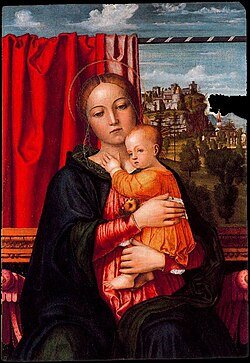
Francesco Morone (c. 1471 – 16 May 1529) was an Italian painter active in his native Verona in a Renaissance style. He was the son and pupil of Domenico Morone, and his work absorbed the influence of Giovanni Bellini, Antonello da Messina and Andrea Mantegna. His first signed independent work was a Crucifixion of 1498 for the Church of San Bernardino, while the frescoes in the sacristy of Santa Maria in Organo, painted between 1505 and 1507, are regarded as among his masterpieces.
Around the turn of the century his style grew softer, showing a faint Leonardesque touch visible in his Madonnas and Child. He trained the young Paolo Morando, known as Cavazzola, and worked for years alongside his close friend Girolamo dai Libri, with whom he decorated the doors of the old organ at Santa Maria in Organo, completed in 1516.
In his last years he drew closer to religion, and his Madonnas took on a sweet and melancholy character. He was buried at San Bernardino, where many of his most important paintings still survive.
Works (12)
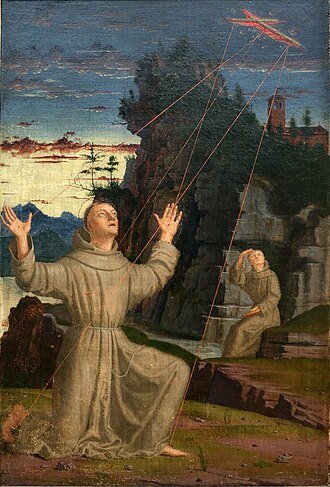
Religious painting by Francesco Morone, executed in tempera on canvas and depicting Saint Francis of Assisi. The available record offers no details about its commission or date, so any reading of its original setting should be treated cautiously. Its large format suggests a work probably made for a space of devotion.
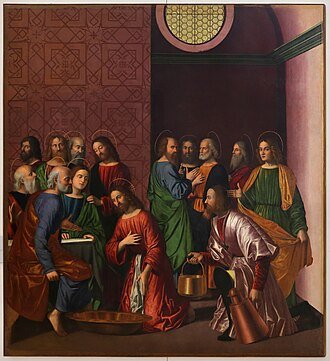
This painting by Francesco Morone, executed in oil on canvas, depicts the Washing of the Feet, a religious scene in which Christ washes the feet of his disciples. Its large format suggests a devotional purpose, although its original location is not known with certainty. It is held in the Museo di Castelvecchio.

A work by Francesco Morone, a painter active in Verona, executed in tempera on panel and held at the Castelvecchio Museum. Its genre places it within religious art. The record offers no further details about the scene depicted, the exact date or the original commission, so any detailed reading of its iconography would lack documentary support here.
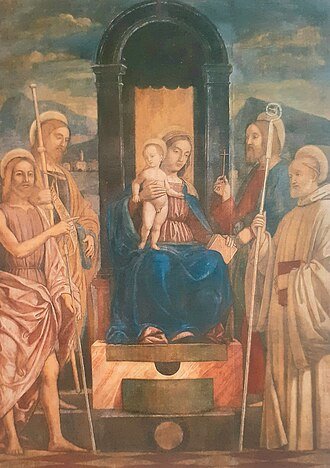
Francesco Morone was a painter active in Verona during the early Renaissance. This work belongs to the collection of the Castelvecchio Museum in the same city, which holds much of the region's painting. With the information available, its exact subject and date cannot be determined, so the museum's record is the best place to find further details.
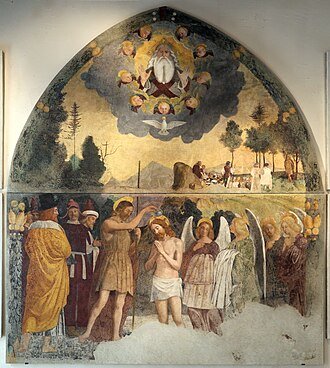
This work is by Francesco Morone, a painter active in Verona, held in the G.B. Cavalcaselle Museum, whose collection centres on mural painting and religious subject matter. The available record gives no details about the scene shown, its date or its commission, so any fuller account of its iconography or composition would lack documentary support. What can be said is that it belongs to the devotional tradition of northern Italy in the early sixteenth century.
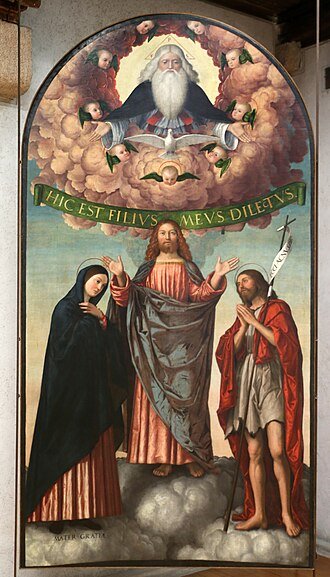
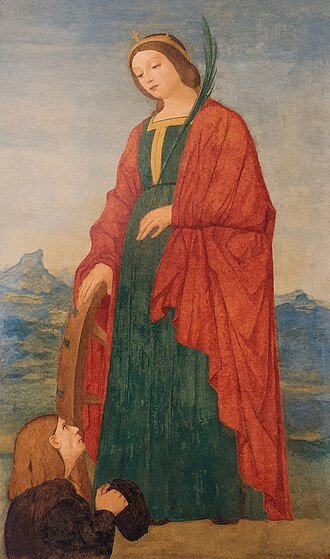

A work by Francesco Morone, a painter active in Verona, held at the Museo di Castelvecchio. Based on the available information, it is a religious painting. The record does not allow us to specify with certainty the scene depicted, the commission or the date of execution, so any fuller reading would require consulting the museum's documentation.
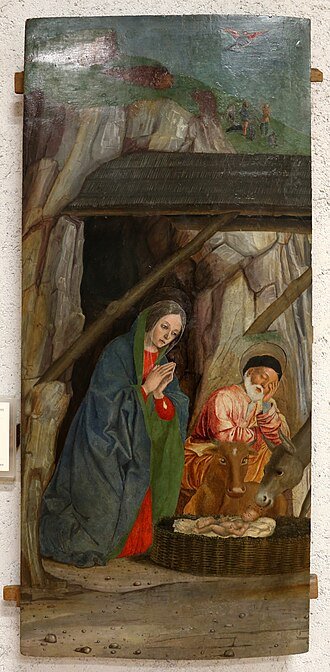
Francesco Morone was a painter active in Verona around the turn from the fifteenth to the sixteenth century, and this work belongs to his religious output. The record does not specify the particular subject or date, so the scene and its original purpose cannot be described with certainty. It can be placed within the devotional painting of his milieu, where sacred figures were often shown with a calm and approachable air.
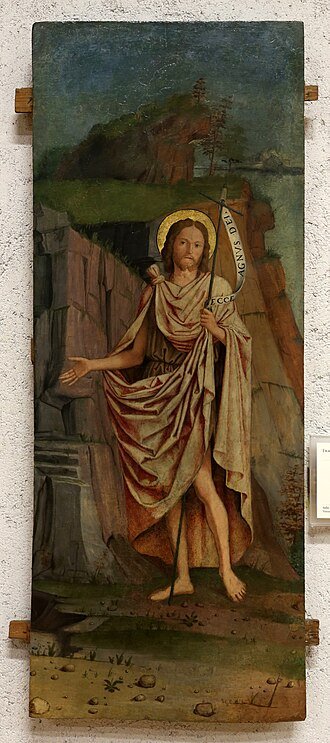
A work by Francesco Morone, a painter active in Verona, classified as religious art and held at the Castelvecchio Museum. The available record offers no details about its iconography, date of execution or commission, so its specific context cannot be established.

Francesco Morone was a painter active in Verona during the early Renaissance. The record for this work offers little detail about its subject, date or commission, so its context cannot be established with certainty. It is held at the Castelvecchio Museum in Verona, an institution that houses much of the city's painting heritage.
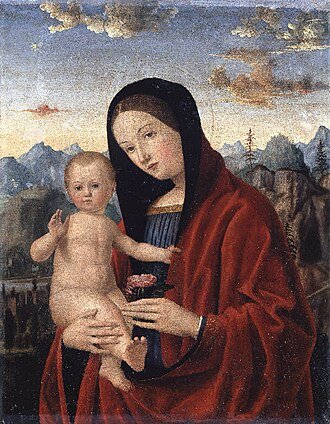
Work by Francesco Morone dated 1509, a painter active in Verona within the orbit of early sixteenth-century Venetian painting. It belongs to the religious genre, suggesting a piece for private devotion or for use in a church setting. The record does not specify its precise subject or original patron, so any further reading of the scene should be approached with caution.
Where to see the work
- Castelvecchio Museum Verona · 9
- Accademia Carrara Bergamo · 1
Curiosities
A sea monster borrowed from Dürer
In the northern-style landscape of the Madonna Moscardo, Francesco reproduces on the left Albrecht Dürer's engraving Sea Monster. It is the only known direct quotation of the German master in his output, whereas it recurs often in the work of his friend Girolamo dai Libri. Both painters probably drew on the same northern prints for inspiration.
A contract demanding praise
The organ doors were commissioned through a contract signed in November 1515 with Abbot Cipriani. It required that they appear beautiful and praised by those who understand art, reflecting the monks' wish to embellish their church after the War of the League of Cambrai had shaken Verona. Centuries later the doors ended up in the parish church of Marcellise, where they still remain.