
Giacomo Ceruti
1698–1767 · Italian late Baroque painter of portraits and genre scenes
Giacomo Antonio Melchiorre Ceruti (Milan, 13 October 1698 – 28 August 1767) was an Italian late Baroque painter active mainly in northern Italy, in Brescia, Venice and Milan. He painted portraits, religious and mythological scenes and still lifes, but he is best remembered for large canvases of beggars, paupers and simple craftsmen, depicted realistically and with empathy. This approach earned him the nickname Pitocchetto, or little beggar.
Training and early years in Brescia
His family moved to Brescia in 1711, and most of his early activity is documented there. His training probably took place in Milan, likely alongside an artist experienced in portraiture and genre rather than in a conventional workshop. His first signed and dated work is the portrait of Count Giovanni Maria Fenaroli, from 1724, which already shows a penetrating naturalism. Among his patrons were the Fenaroli, Avogadro and Lechi families.
The beggar series
Around 1726 to 1728 he worked on the Broletto palace, and in those same years he painted a series of large beggar scenes for the Avogadro family. In them he removed any anecdote or moral lesson and treated his sitters with dignity and individuality, an unusual attitude in the genre painting of his time. His sober palette of grays, ochres and beiges, applied with thin brushstrokes, underlines that restraint.
Venice and a change in colour
In 1736 he travelled to Venice at the invitation of Marshal Matthias von Schulenburg, a German collector, for whom he painted portraits, landscapes and scenes with paupers. His stay in the Veneto brought a deeper maturity to his language, with livelier colours, fluid brushwork and a more suggestive light. From 1737 to 1742 he lived in Padua.
Milan and the final years
Around 1743 he settled permanently in Milan, where leading families such as the Belgioioso and the Litta commissioned portraits and pastoral idylls from him. He died in Milan in 1767.
His legacy lies in raising humble people to the status of worthy subjects for large-scale painting, a stance that set him apart from genre painters who mocked the poor or used them as moral examples.
Works (5)


This genre scene by Giacomo Ceruti, dated 1737, shows a group of beggars gathered in a space with little architectural detail. Painted on canvas, the work focuses on the posture, gestures and physical presence of figures of humble status, observed directly and without idealization. Beyond what the record states, little more can be said with certainty without additional sources.
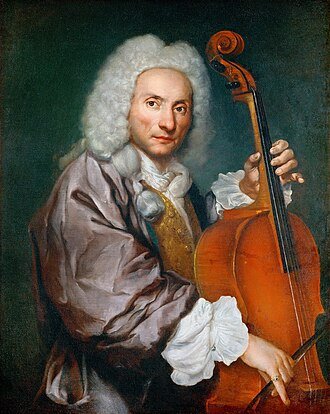
Painted in 1750 in oil on canvas, this portrait shows an unidentified man who, as its title indicates, plays the cello. The instrument hints at his connection to music, though the work offers no further information about his life. Attention centres on the figure and his direct presence before the viewer.
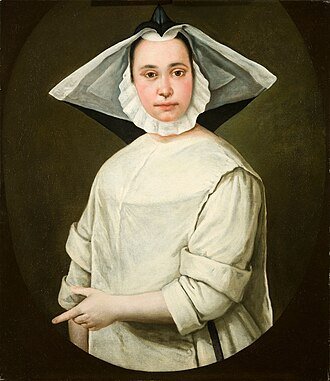
Portrait of a Young Nun, an oil painting from 1730 by Giacomo Ceruti. It belongs to the portrait genre and shows a female figure dressed in religious habit. Without additional sources, the sitter's identity, the commission and the circumstances of its creation cannot be established with certainty.

Giacomo Ceruti's work, dated 1730 and painted on canvas, shows a scene of a mother with her children, a close and domestic subject. The circumstances of its commission and the specific context of its making are not known with certainty, so reading the picture should rely on what can be seen in the image itself.
Where to see the work
- Jacques Goudstikker collection · 1
- Carmen Thyssen Collection · 1
- Kunsthistorisches Museum Vienna · 1
- Museo Poldi Pezzoli Milan · 1
Teachers and pupils
Studied with
- Carlo Ceresa 1609–1679
Curiosities
A nickname drawn from his paintings
The nickname Pitocchetto, roughly 'little beggar', was given to him because of his scenes of the poor and simple craftsmen. It stuck with him and sums up the subject for which he would be remembered, though it does not reflect the range of his output, which also included portraits, still lifes and religious themes.
Debts that drove him away
In 1733 he fled his creditors in Brescia and moved to Gandino. His debts came from a failed investment in forest land financed by loans he could not repay. In Gandino he received commissions for the Basilica of Santa Maria Assunta, where he produced a cycle of 28 paintings of prophets and Old Testament figures.