Giunta Pisano was an Italian painter of the Italo-Gothic style, active in Pisa in the first half of the 13th century. He is the earliest Italian painter whose name is inscribed on a surviving work: a crucifix that hung for a long time in the kitchen of a convent of St Anne in Pisa. He is said to have worked from 1202 to 1236, though his birth and death dates are debated, with some sources suggesting around 1190 and 1250. He usually painted on cloth stretched over wood and prepared with plaster. Frescoes in the upper church at Assisi are attributed to him, including a 1236 Crucifixion showing Brother Elias, probably made with Greek artists. His masterpiece is the crucifix in the Basilica of Saint Dominic in Bologna, still strongly shaped by Byzantine style. Giunta spread a suffering Christ, his body sharply curved, in place of the serene traditional image, and this shaped Cimabue.
Works (2)
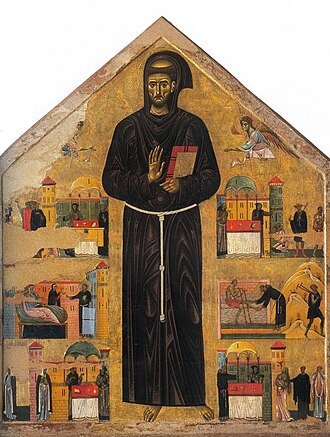
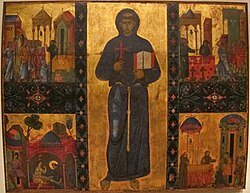
A wooden panel showing Saint Francis of Assisi alongside six episodes from his life, as its title indicates. It is dated to around 1250 and attributed to Giunta Pisano. Its religious character places it within medieval devotional painting, where narrative scenes probably helped viewers follow the saint's story.

A panel painted in tempera with gold leaf showing Saint Francis of Assisi. The record attributes it to Giunta Pisano and dates it to around 1230. The gilded ground and the religious figure of the saint suggest it was probably made for devotional use. Its interest lies mainly in what it preserves of early Italian painting.
Where to see the work
- National Museum of San Matteo Pisa · 1