Ike Gyokuran
1727–1784 · Japanese Bunjinga painter, calligrapher and poet
Ike Gyokuran (1727-1784) was a Japanese Bunjinga painter, calligrapher and poet who worked in Kyoto during the Edo period. She was famous in her city during her lifetime and remains a celebrated artist in Japan. She matters especially because it was exceptionally rare for a woman in eighteenth-century Japan to work as a painter.
She was born from a long extramarital relationship between her mother, Yuri, and a high-ranking retainer of the Tokugawa shogun. Her parents named her Machi, but as a child she received the art name Gyokuran, meaning "Jewel Waves", from her teacher Yanagisawa Kien. She trained with Kien, a regular at her mother's teahouse, who probably introduced her to Ike Taiga. She married Taiga, who later also became her teacher: he taught her the nanga style, a Japanese version of a Chinese manner, while she taught him waka poetry.
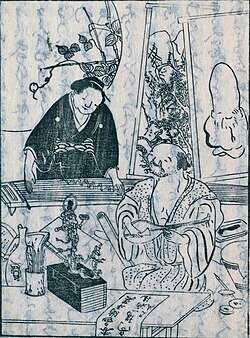
The couple created works together, influencing each other, and were known for playing music together as equals, which was unusual in a society that regarded women as inferior. Gyokuran painted folding screens, sliding doors, handheld and hanging scrolls and fans, and often painted small scenes on which she inscribed her poems in calligraphy. She lived with Taiga in a modest studio beside the Gion shrine.
Her legacy endures in Kyoto: during the Jidai Matsuri, young women dress as historical figures of the city, and she is one of those portrayed. In 2015 her work was shown in two Tokyo exhibitions devoted to Japanese women artists of the Edo period.
Teachers and pupils
Studied with
- Ki-en 1703–1758