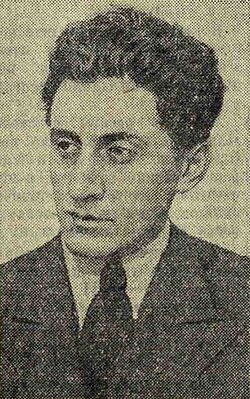
Lev Kerbel
1917–2003 · Soviet sculptor of commemorative monuments
Lev Yefimovich Kerbel (Semenivka, Chernihiv Oblast, 1917 - Moscow, 2003) was a Soviet sculptor and teacher, best known for his large public monuments. His work developed within the framework of Socialist Realism and is a clear example of the official commemorative sculpture of the USSR.
Born into a Jewish family in the Chernihiv governorate, he moved as a child to the Smolensk region, where he began modelling. In 1934 he won a Komsomol prize for a bas-relief of Lenin and, after receiving a recommendation from Nadezhda Krupskaya, trained in Leningrad and then, from 1937, at the art institute in Moscow. In 1941 he won first prize in the first round of a competition for a monument to Vladimir Mayakovsky, but the project was left unfinished by the war.
During the Second World War he served as a military artist with the Northern Fleet. At the end of the conflict he was posted to Berlin, where, together with Vladimir Tsigal, he completed the monument to the Soviet heroes of the capture of the city, in the Tiergarten park. He then produced many works in the Soviet Union and abroad, including several monuments to Lenin in Moscow, Smolensk and Havana, and the statue of Karl Marx for the Theatre Square in Moscow. His output also includes figures of Communist Party leaders and military men, and more than seventy monuments are attributed to him.
From 1962 he headed the sculpture department of the Surikov Moscow Art Institute, where he trained many sculptors. He received the Stalin Prize, First Class, the Lenin Prize and the title Hero of Socialist Labour in 1985. He was also the author of the monument to the heroes of the submarine Kursk, unveiled in Moscow in 2002. He died in Moscow in 2003 and was buried in the Novodevichy Cemetery.