
Vittore Carpaccio
1465–1520 · Venetian painter of the late Quattrocento
Vittore Carpaccio (Venice, c. 1460-1465 - c. 1525/1526) was an Italian painter of the Venetian school, active during the transition from the fifteenth to the sixteenth century. He is considered one of the great visual storytellers of his city. Although he kept his distance from the Humanist currents that transformed painting in his lifetime, he developed a highly personal style, recognisable for its architectural detail, its command of perspective and its bold use of colour. His importance lies in the way he told stories: scenes of saints, confraternity cycles and urban views that help historians reconstruct late fifteenth-century Venice.
Origins and training
Little is known about his youth. He was the son of Piero Scarpaza, a furrier, and his family came originally from Mazzorbo, an island in the diocese of Torcello. His birth date is debated. A will of 1472 names him as an heir of his uncle Fra Ilario, which implied a minimum age, but later study of Venetian law made heirs of younger children possible, so the range has been widened to roughly 1460-1465. He changed his family name to a form better suited to the learned Venetian milieu, and his early signatures show variants such as Scharpaço and Scarpazo. By about 1490 he was using the Latin form Carpathius, from which the modern name derives.
He probably trained in the Bellini workshop, though scholars disagree on whether Gentile or Giovanni guided him. He also absorbed the influence of Antonello da Messina, whose sense of light and dark backdrop shaped the Salvator Mundi, and of older Venetian painters such as Alvise Vivarini. A journey to the East has been suggested, but there is no sure evidence. The exotic costumes and landscapes in his work may instead come from the example of Gentile Bellini.
Early works and portraits
His earliest surviving works are a Virgin and Child, of about 1488, and a Salvator Mundi with Four Saints, of about 1490. The Man with a Red Hat, dated around 1485, is also attributed to this early period and shows his taste for portraiture. Among his works of this phase is Two Venetian Ladies, in the Museo Correr in Venice, which is now thought to have lost its upper part. A panel showing a hunting scene on the lagoon, at the Getty Museum in Los Angeles, was long linked to it, but it does not belong to that painting. John Ruskin admired the work for its execution and regarded it very highly.
Two individual portraits of courtesans survive, one in the Borghese Gallery in Rome and another in the Palazzo Mocenigo in Venice. Most of his portraits, however, have been lost. His technique in them has links with Giorgione.
The Legend of Saint Ursula
Between 1490 and 1496 he painted nine canvases for the Scuola di Sant'Orsola, based on the Golden Legend of Jacopo da Varazze. It is one of his best-known cycles and shows how quickly he matured: in the first canvases light is treated in a still primitive way, while the last ones show full command of geometric perspective. The order of painting does not follow the order of the events. The episodes include the arrival of the English ambassadors, the dream of the saint, the arrival in Cologne and the martyrdom of the pilgrims.
The composition draws on the sacred theatre of the period. In the Farewell of the Ambassadors, the action unfolds in an open pavilion and is read from right to left, like a stage divided into successive moments. In the lower left corner a man in a red toga may allude to the Festaiolo, the narrator who introduced theatrical performances. The Dream of Saint Ursula shows a sober bedroom, an angel and a shaft of pink light, and a preparatory drawing in the Uffizi reveals the poetic intention behind it. After the confraternity was suppressed by a Napoleonic decree in 1810, the paintings passed to the Gallerie dell'Accademia in Venice.
Confraternities, the Rialto and the Doge's Palace
For the Scuola Grande di San Giovanni Evangelista he painted a cycle on the history of the Cross. Its best-known work is the Miracle of the Relic of the Cross at the Ponte di Rialto (1496), set beside the bridge and offering a detailed view of Venetian urban life. Around 1501-1507 he worked with Giovanni Bellini on the Sala del Maggior Consiglio in the Doge's Palace. That cycle was lost entirely in the fire of 1577. It is known to have included a Historia di Ancona, which may have had a landscape and procession similar to those of Saint Ursula. According to the sources, Carpaccio continued to prefer commissions from smaller confraternities, where he could depict the bustle of Venetian people.
Saint George, Saint Jerome and Saint Tryphon
Between 1502 and 1507 he painted for the Scuola di San Giorgio degli Schiavoni, linked to Venice's Dalmatian community, a series devoted to the three patron saints of Dalmatia: Jerome, George and Tryphon. Unlike the Ursula cycle, each canvas focuses on a single episode, which simplifies the structure while heightening the fantastic. These paintings remain in their original setting.
Saint Augustine in His Study, from about 1502, shows a humanist's study crowded with collectors' objects, including Etruscan vases and a Mamluk metal candlestick. The saint, pen raised, receives the premonition of Jerome's death, and a ray of light from the window fills the room, a device that may derive from Jan van Eyck or Antonello da Messina. Saint Jerome and the Lion in the Monastery shows friars fleeing in disarray from the animal, with a humour rare in Italian Renaissance painting. Saint Tryphon Exorcising the Demon (1507) presents the young saint before a demon that Carpaccio paints like a griffin. In Saint George and the Dragon, the scene takes place on ground strewn with macabre remains, with a fabulous eastern city in the background.
Altarpieces, the Meditation and final years
From the early 1510s he found it harder to compete with Titian, Giorgione or Lorenzo Lotto, whose innovations outpaced his more conservative manner. Many critics later judged his style old-fashioned, although in his last years he tried to reconcile Renaissance currents with his more medieval approach. He therefore turned to smaller formats and produced altarpieces for Venetian churches, such as St Thomas Aquinas Enthroned (1507), the Presentation of Christ in the Temple (1510) and the Martyrdom of the Ten Thousand (1515).
Around 1510 he painted the Lamentation over the Dead Christ and the Meditation on the Passion, sombre and symbolic works with leafless trees and crumbling buildings. In the same year he painted Young Knight in a Landscape, now in the Thyssen-Bornemisza Museum. Between 1511 and 1520 he completed five canvases for the Scuola di Santo Stefano, among them The Sermon of St Stephen, in the Louvre, and the Disputation of St Stephen, in the Brera in Milan. His late production was often sent to provincial patrons and was carried out in part with his sons Benedetto and Piero. In 1516 he painted a Sacra Conversazione for the then-Venetian town of Capodistria, now Koper, where he spent his last years and died.
Legacy
Carpaccio was esteemed by his contemporaries, and Giorgio Vasari placed him at the forefront of Venetian painters. In the nineteenth century John Ruskin and the painter Pompeo Molmenti revived his reputation. Ruskin compared his work to a magic mirror that flashes back whatever it sees with clarity. His scenes of urban and everyday life in Venice remain an essential source for historians. Later painters such as Paris Bordone drew on his compositions, and his influence reached twentieth-century artists including Giorgio De Chirico and Paul Klee. His name is also linked to a Venetian dish of thinly sliced raw beef, although the sources do not agree on when it was created.
Works (57)


Vittore Carpaccio painted this work in 1495 using tempera on canvas. It shows Saint Ursula asleep in a plain bedroom, where an angel enters through the window to announce her martyrdom, signalled by the palm she carries. A dog, a crown and a piece of coral appear near the bed, though their precise meaning is best read with caution. The scene invites viewers to consider the passage from sleep to revelation.

Vittore Carpaccio painted this large scene in 1495, titled Arrival of the English Ambassadors. Executed in oil on canvas, its wide horizontal format allows many figures to share a single space. The available information does not clearly establish the circumstances of its commission. Today it is held at the Gallery of the Academy in Venice.

Oil on canvas by Vittore Carpaccio, dated 1514, showing Saint Stephen amid a clash or dispute. It belongs to the High Renaissance of the Venetian school and falls within religious art. It is held at the Pinacoteca di Brera in Milan, where it can be seen as a work by the Venetian painter.

The painting shows a mythological episode involving Hippolyta, queen of the Amazons, and Theseus, king of Athens, as its title makes clear. Vittore Carpaccio completed it in 1495 in oil on panel, and it belongs to the mythological genre. The available information says little about its commission or original setting, so the scene is best read through its title and its figures.


This large 1492 oil on canvas shows pilgrims arriving in Rome and meeting the Pope. Among the recognisable motifs are the Virgin, Saint Ursula of Cologne and the Castel Sant'Angelo, which places the scene in the city. Today the painting hangs in the Gallerie dell'Accademia in Venice.

This large canvas by Vittore Carpaccio, dated 1493, brings together two moments from the story of Saint Ursula in one composition: the martyrdom of the pilgrims who accompanied her and the funeral of the saint, with a bier and a tomb in the background. The record refers to the city of Cologne and the Huns as part of the scene, along with elements such as the sword, the severed head and the blood, which mark the violence of the episode. Its wide format and the scene spread across several planes reflect the Venetian painter's interest in narrative and space.

This panel by Vittore Carpaccio, dated around 1500 and painted in tempera, presents a scene of religious meditation with a devotional character. In the foreground are figures linked to the Passion of Christ, including Jesus, alongside a skull that points to death and to reflection on suffering. The record also names Job and Jerome among the figures depicted. Without further references, it is best read as a religious work intended for personal devotion.

The painting shows the return of the ambassadors to the English court, a narrative subject that Carpaccio treats as history painting. Dated 1498, it uses tempera on canvas across a very wide format, allowing a crowded scene of figures, architecture and landscape to unfold. Without further reference sources, it is best read as a visual account of a diplomatic mission.

Jerome appears beside a lion, an animal tied to the legend that surrounds this saint, which is why he is usually recognised by it. Dated 1502, the work is an oil on canvas of broad format by Vittore Carpaccio, now housed in the church of San Giorgio degli Schiavoni.


Painted by Vittore Carpaccio in 1502, this religious work depicts the calling of Matthew, the moment he is invited by Jesus to follow him. It is executed in tempera on canvas, a combination typical of its period. Today it is housed in the church of San Giorgio degli Schiavoni, where its devotional character matches its subject.

Painted by Vittore Carpaccio in 1507 in tempera on canvas, this large work shows a baptism in which Saint George administers the sacrament to a man. Its title refers to the Selenites, the people the scene alludes to. It is kept in the Church of San Giorgio degli Schiavoni, within the context of religious art.


Painted by Vittore Carpaccio in 1502, this work depicts the funeral of Saint Jerome, the religious figure at its centre. The scene is arranged with an orderly, calm gaze, and the mourners' grief is expressed with restraint. It remains in the Church of San Giorgio degli Schiavoni in Venice.

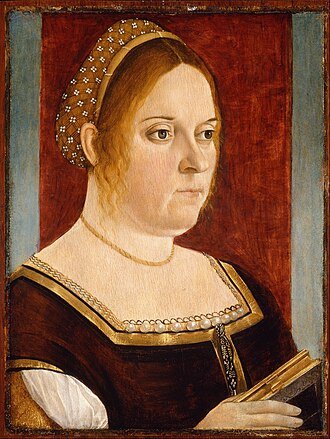
This small portrait of a woman, dated 1500 and attributed to Vittore Carpaccio, is executed in tempera and oil on a lime wood panel. Its modest format invites close looking at the surface and its finish. The available record gives no details about the sitter's identity or the commission, so any reading of its purpose or meaning should be treated with caution.

Vittore Carpaccio painted this canvas in 1511, showing the ordination of Saint Stephen as deacon, with Saint Peter presiding over the rite. The religious scene unfolds in an orderly setting, and the wide horizontal format, on a large scale, lets viewers take in all the participants at once. It is now held in the Gemäldegalerie in Berlin.

This panel by Vittore Carpaccio, dated 1510 and painted in tempera, depicts the Presentation in the Temple, a religious subject. The work is held at the Gallery of the Academy in Venice. Its large vertical format makes it a notable example of the religious painting of its period.


A work attributed to Venetian painter Vittore Carpaccio, of which the record preserves only the title, referring to a polyptych from Grumello de' Zanchi. With the available sources, its date, commission and exact composition cannot be established, so any further detail would lack support.

The available information identifies only the author, Vittore Carpaccio, and gives no title, date, commission or collection. For that reason, it is not possible to describe the scene, its composition or its symbolism with any precision. To learn more about the work, it is worth consulting a specialist catalogue or the documentation of the institution that holds it.

Religious painting showing the Virgin seated on a throne with the Christ Child, surrounded by six saints arranged around her. Its large upright format suggests a work meant for a place of worship. The available information does not allow us to say with certainty who commissioned it or identify each saint with confidence.

Vittore Carpaccio painted this small panel in tempera in 1490, showing several soldiers and men dressed in oriental style. The work does not clearly depict a specific scene or narrative episode, so its subject remains open. It is now held at the Uffizi Gallery in Florence, and its main interest lies in the exotic costumes it displays.

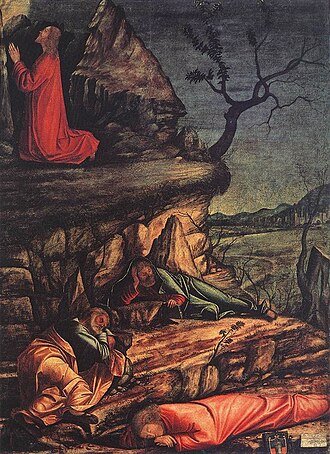
This tempera painting by Vittore Carpaccio, dated 1502, shows Jesus praying in the Garden of Gethsemane shortly before his arrest. The record places it in the church of San Giorgio degli Schiavoni, but offers no further details about its commission or history. It is a religious subject centred on a single solitary figure set against a landscape.


The painting shows a sibyl, a figure from ancient tradition believed to deliver prophecies. Vittore Carpaccio painted it in 1510, and it is now held at the Uffizi Gallery. No details about its commission or composition are available, so the most careful reading focuses on the subject itself: a prophetic woman.


Work attributed to Vittore Carpaccio, dated 1507 and executed in tempera on canvas. It shows the Virgin absorbed in reading, a devotional subject of an intimate character within religious art. The record offers no information about its commission or original setting, so any more detailed interpretation should be treated with caution.

Carpaccio's Visitation, dated 1504 and painted in oil on canvas, shows the meeting of Mary and Elizabeth, drawn from the Gospel account. The work is held at the Ca' d'Oro in Venice. Beyond these basic facts, the record offers no further details about its commission or composition, so it is best to keep to what is documented.

This panel by Vittore Carpaccio, dated 1500 and painted in oil, shows the Virgin Mary with the Christ Child and, as its English title indicates, the young John the Baptist. It is a religious work of intimate scale, likely made for private devotion. Beyond what the title suggests, the record offers no further details on its composition, colour or provenance, so the painting itself is the best guide to its particular qualities.

This oil-on-panel painting by Vittore Carpaccio, dated 1508, belongs to the High Renaissance of the Venetian school and treats a religious subject: the death of the Virgin Mary. Its generous scale is held in the Pinacoteca Nazionale. Without further reference material, its commission and compositional details cannot be confirmed, so this overview stays with its subject, technique and stylistic context.

A work attributed to Vittore Carpaccio, dated around 1500 and painted in oil on wood, according to the record. It belongs to the religious painting genre, though reliable information about its specific subject, original commission and history before the collection that holds it is not available. Any description of its scene or meaning should therefore be treated cautiously until specialised sources are consulted.


The painting shows the Annunciation: the angel Gabriel announces to the Virgin Mary her motherhood. The scene includes God the Father and a dove representing the Holy Spirit. A garden and Renaissance-style architecture frame the figures, placing the episode in a carefully arranged setting.

Portrait of Doge Leonardo Loredan, painted in oil on panel in 1502 by Vittore Carpaccio within the Venetian school of the High Renaissance. The work, held at the Accademia Carrara, belongs to the portrait genre, focusing on the figure of the ruler himself. Beyond these basic facts, the available information says little about its commission or composition.

Painted by Vittore Carpaccio in 1514, this painting depicts Saint Vitale of Milan, the figure it presents as its central subject. It remains in the church of San Vidal. The available information does not specify its commission, original setting or iconographic details, so any reading of its composition or symbolism should be checked against specialist studies.

A genre scene centred on a hunt in the lagoon, the subject named in the title. The work belongs to the collection of the Getty Center and falls within the genre of scenes of everyday activity rather than religious or historical narrative. Without reference sources, this reading stays with what the title and classification reliably indicate, avoiding claims about date, patron or setting.

Painted by Vittore Carpaccio in 1515, this religious work is held at the Gallerie dell'Accademia in Venice. Its title refers to ten thousand martyrs on Mount Ararat, a sacred episode the painting brings together in one crowded collective scene. Executed in oil on canvas, it is a large-format composition devoted to that martyrdom.

This religious painting by Vittore Carpaccio is dated 1515, late in his career in Venice, and is now held at the Gallerie dell'Accademia. The available information does not specify the sacred episode depicted or the original commission, so a detailed reading of its figures calls for specialist studies.

Painted by Vittore Carpaccio in 1510, this religious work shows a prophet in a tall, narrow vertical format. It is held in the Uffizi Gallery in Florence. The available information does not clarify its commission or setting, so it is best approached mainly through its single figure and its upright shape.
Where to see the work
- Gallerie dell'Accademia Venice · 12
- Scuola di San Giorgio degli Schiavoni Venice · 8
- Museo Correr Venice · 3
- Uffizi Gallery Florence · 3
- Gemäldegalerie Berlin Berlin · 2
- Thyssen-Bornemisza Museum Madrid · 1
- Calouste Gulbenkian Museum Avenidas Novas · 1
- Louvre Museum Paris · 1
- Andrew W. Mellon collection Washington, D.C. · 1
- Pinacoteca di Brera Milan · 1
- Musée Jacquemart-André Paris · 1
- Metropolitan Museum of Art New York City · 1
- Khanenko Museum Kyiv · 1
- Doge's Palace Venice · 1
- Denver Art Museum · 1
- Staatsgalerie Stuttgart Stuttgart · 1
- Galería Nacional de Arte Washington, D.C. · 1
- Samuel H. Kress Collection · 1
- Ca' d'Oro Venice · 1
- Städel Museum Frankfurt · 1
Curiosities
Collectors' objects
In Saint Augustine in His Study, sculptures, Etruscan vases and a Mamluk metal candlestick are displayed on a shelf. All of them were highly prized by Renaissance collectors. The painting shows how such pieces could spill out of one room into others in a house, turning the saint's study into an idealised domestic space filled with material culture.
Glass inspired by a painting
His work also influenced the glass industry of sixteenth-century Murano. Milk-glass tumblers, especially those showing brides to celebrate engagements, drew heavily on Two Venetian Ladies, dated around 1490. A painting of courtesans thus inspired everyday objects, and the taste for his figures and costumes passed from the canvas into the domestic life of the city.