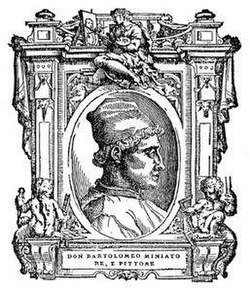
Bartolomeo della Gatta
1448–1502 · Florentine painter, illuminator and architect of the Quattrocento
Bartolomeo della Gatta (Florence, 1448 - Arezzo, 1502), born Pietro di Antonio Dei, was an Italian painter, illuminator and architect from Florence. The son of a goldsmith, he trained in a craft milieu where drawing and precise handwork were common. His career combines two lives, that of an artist and that of a religious man, which makes it a useful case for studying how the two could coexist in fifteenth-century Italy.
In 1468 he joined the Camaldolese order, probably at Santa Maria degli Angeli in Florence, which his brother Niccolo had already entered. When he took vows he adopted the name Bartolomeo. He was a colleague of Fra Bartolommeo. About 1481 he was summoned to Rome, where he contributed to the fresco cycle on the walls of the Sistine Chapel, and he is also recorded as collaborating with Luca Signorelli. Among his surviving works are the Assumption of Mary (1473), the Archangel St Michael (1480), the Annunciation of the Virgin Mary (1487), the Stigmata of St Francis (1487) and the Madonna and Child with Four Saints (1486). His subjects are mainly religious, and his painting sits within the Florentine tradition, although the sources do not allow a detailed account of how his style developed.
He eventually became abbot of the abbey of San Clemente in Arezzo, where he died in 1502 and was buried. His legacy survives mainly in his religious paintings and in his work as an illuminator and architect, although little is known about the latter. His Roman commissions place him among the artists who worked on the major papal projects at the close of the fifteenth century.
Works (5)
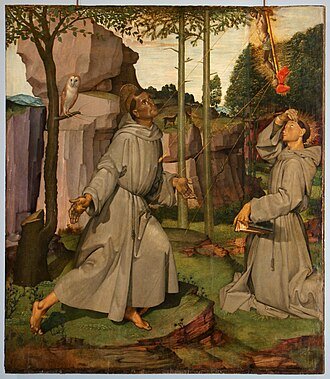
Painted by Bartolomeo della Gatta in 1487 using tempera on panel, this work shows the stigmatization of Saint Francis, a subject frequently treated in religious art. It is held in the Pinacoteca Comunale in Castiglion Fiorentino, a town in Tuscany where the painter's religious output can be studied.
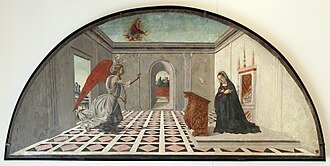
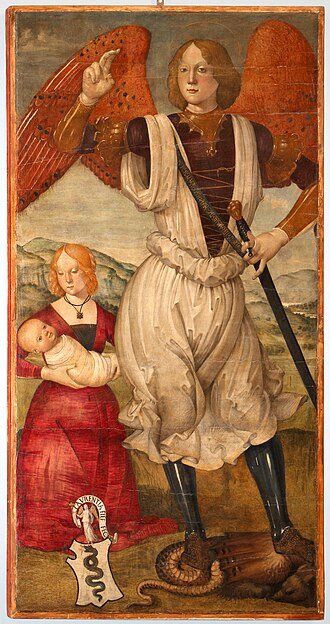
This tempera on panel shows the Archangel Michael, a familiar subject in religious art, as a heavenly warrior charged with defeating evil. The work is dated around 1480 and is attributed to Bartolomeo della Gatta, about whom reliable information is scarce. With the available data, little more can be said about its commission or original setting.
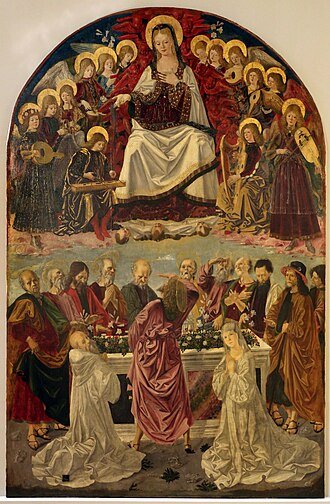
This tempera on canvas, dated 1473 and attributed to Bartolomeo della Gatta, shows the Assumption of Mary surrounded by saints including Scholastica and Benedict of Nursia, the apostle Thomas and an angel. Reliable information about its commission or context is lacking, so reading should stay close to what the painting shows.
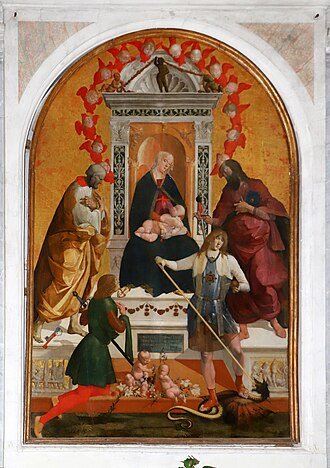
A work by Bartolomeo della Gatta dated 1486, showing the Virgin and Child surrounded by four saints in a sacra conversazione arrangement. The figures include Peter, Paul of Tarsus and the archangel Michael, who are recognisable through the attributes customary in religious painting of the period. It belongs to the genre of religious art and is kept at the Collegiata di San Giuliano. Details about its commission or original reception are not recorded here.
Where to see the work
- Musée du Petit Palais Avignon · 1
- Diocesan Museum in Cortona Cortona · 1
Curiosities
A painter who also designed buildings
Besides painting and illuminating manuscripts, Bartolomeo della Gatta is recorded as an architect, a side of his work far less known than his painting. The available references do not detail which buildings he designed or when, so his architectural activity remains poorly documented. Combining these crafts was not unusual at the time, when a workshop could range from painting to construction, but the traces he left in architecture are still vague.
Buried in the abbey he governed
Bartolomeo della Gatta ended his life as abbot of the abbey of San Clemente in Arezzo, and he was buried in that same church. His path began in a Florentine convent and took him to the papal court in Rome, and it closed where he led a religious community. Being laid to rest in the house he governed shows how central his identity as a monk remained to the end of his life.