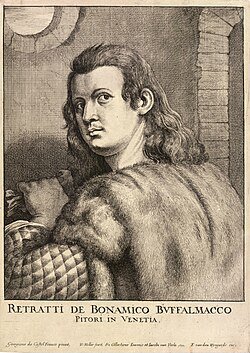
Buonamico Buffalmacco
1262–1340 · Gothic painter from Florence active in Pisa
Buonamico Buffalmacco, also known as Buonamico di Martino, was an Italian painter active in Florence in the first half of the fourteenth century and a leading figure of Gothic painting in Tuscany. His name is linked above all to the great frescoes of the Campo Santo in Pisa, although the attribution is not undisputed and none of his securely documented work has survived.
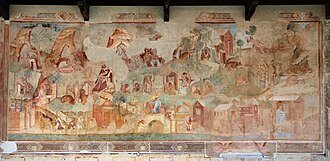
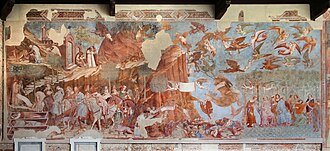
Specialists generally credit him with the Pisa cycle, painted around 1336, which includes The Triumph of Death, The Last Judgement and Hell, and the Thebaid. Archival documents confirm his presence in Pisa that year. The blunt realism and strong colours of the figures, arranged like a large medieval miniature with moralising inscriptions, set the cycle apart from the elegance of Giotto. When the frescoes were detached, sinopias, preparatory drawings in red ochre, came to light; they are now kept in the Museo delle Sinopie in Pisa.
Vasari wrote a biography that mixes accounts of works now lost with comic anecdotes, so his information calls for caution. His reputation as a practical joker also comes from Boccaccio, who includes him in the Decameron, and from Franco Sacchetti. The Pisan cycle, painted shortly before the Black Death of 1348, enjoyed great success afterwards and was widely imitated in Italy during the Renaissance.
Works (3)
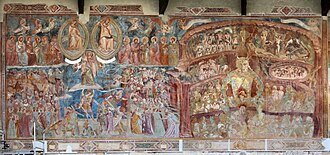
This large fresco in the Camposanto of Pisa, attributed to Buonamico Buffalmacco and dated 1336, depicts the Last Judgement and Hell. As a religious work, it focuses on the fate of souls after death, showing the damned and the saved in a single, crowded scene. Its considerable size invites viewers to take in its many figures slowly.
Where to see the work
- Camposanto Monumentale Pisa · 3