
Giovanni Boldini
1842–1931 · Italian genre and portrait painter, active mainly in Paris
Giovanni Boldini (31 December 1842 – 11 January 1931) was an Italian genre and portrait painter who lived and worked in Paris for most of his career. He is remembered above all for his portraits of fashionable society in the Belle Époque, for a loose, vibrant brushwork and for the way he captured movement in dresses, figures and gestures. Although his professional life unfolded in France, his Italian training and his ties with the Macchiaioli shaped much of his work.
Childhood and training in Ferrara
Boldini was born in Ferrara in 1842, the eighth of thirteen children of Antonio and Benvenuta Caleffi. His father, a painter in the purist tradition who also worked as a restorer, gave him his first lessons in drawing. The elder Boldini was said to be technically accomplished and to make fine copies after Raphael and Venetian landscape painters, so the young Giovanni grew up surrounded by classical models and a careful craft. From 1858 he attended the painting courses of Girolamo Domenichini and Giovanni Pagliarini, held in the Palazzo dei Diamanti, and he had the chance to study at first hand the great Ferrarese painters of the Quattrocento, as well as Dosso Dossi and Parmigianino.
His first important work was The Courtyard of the Family House, an oil dated 1855. Late in that decade came a Self-Portrait at Sixteen and portraits of his brother Francesco, of Maria Angelini and of Vittore Carletti. These early pieces already reveal an interest in portraiture, the genre that would come to dominate his career.
Florence and the circle of the Macchiaioli
In 1862 he enrolled at the Academy of Fine Arts in Florence, where he studied under Stefano Ussi and Enrico Pollastrini. He attended classes only irregularly. His real education came from the city's cafés, above all the Caffè Michelangiolo, the meeting place of Florentine artists. There he got to know Giovanni Fattori, Odoardo Borrani, Telemaco Signorini and Cristiano Banti, whose villas at Montorsoli and Montemurlo he visited as a guest. With them he shared a search for a painting of light and direct observation, which is now associated with the Macchiaioli, the Italian precursors of Impressionism. His landscapes show that spontaneous response to nature, though his reputation would rest mainly on his portraits.
He was drawn early to the elegant salons of aristocratic and middle-class society. As a guest of the Falconer family he decorated, between 1867 and 1870, the walls of a small room in their villa La Falconiera at Pistoia, using dry tempera. The house was bought in 1938 by the painter's widow, and about a hundred of his works are still kept there. This bond with high society would remain a constant throughout his career.
Travels, London and the move to Paris
In 1866 he travelled to Naples with Banti, whom he painted on several occasions. The following year he went to France with the Falconers. At Monte Carlo he painted the Generale spagnolo, which he later regarded as one of the best things of his youth. In Paris he visited the Universal Exhibition and met Edgar Degas, Alfred Sisley and Édouard Manet, sharing a period of intense renewal in painting.
In 1870 he settled in London at the invitation of William Cornwallis-West, whom he had met in Florence. Cornwallis-West gave him a studio in the centre of the city, frequented by high society, yet by the end of the year Boldini was back in Florence. The definitive move came in October 1871, when he settled permanently in Paris. He opened a studio on the Avenue Frochot and later another on Place Pigalle, where he lived with the model Berthe, who appears in many compositions of those years.
Success in Paris and society portraiture
In Paris he worked for Goupil, the city's most important dealer, whose stable already included highly successful painters such as Mariano Fortuny and Ernest Meissonier, as well as the Italians Giuseppe Palizzi and Giuseppe De Nittis. For the firm he produced a series of genre pictures in the eighteenth-century taste, then very fashionable. In 1874 his painting The Washerwomen was a success at the Paris Salon.
His private life and his career evolved together over the decade. He ended his relationship with Berthe and began another with the Countess Gabrielle de Rasty, whose portrait he showed at the Salon of 1875. That same year he briefly returned to Ferrara after the death of his mother. In 1876 he travelled to Germany, where he met and painted the great artist Adolph von Menzel, and to Holland, where he admired the work of Frans Hals. By the 1880s he was already a sought-after portraitist among the so-called bel mondo.
In 1889 he was named commissioner of the Italian section of the Paris Universal Exhibition, where he showed three of his portraits, among them the well-known Portrait of Emiliana Concha de Ossa. His decision to enlarge the format of his canvases is attributed to the influence of the Swedish painter Anders Zorn, whom he met in the 1890s.
Verdi, Donna Franca and the salon controversies
One of the most cited episodes of his career is the portrait of Giuseppe Verdi. He painted it first on canvas in 1886 and gave the picture to the composer seven years later in Milan. Not satisfied, he redid the subject in pastel on paper, in five hours. He kept this second version, showed it at the Paris Exhibition of 1889 and at the First Venice Biennale in 1897, and finally donated it to the Galleria d'Arte Moderna in Rome in 1918. He also attended the premiere of Verdi's Otello at La Scala in Milan on 5 February 1887, having been invited to the box.
His quick, brilliant brushwork, daring necklines and bold poses brought him great popularity and some controversy. In the spring of 1900 he was a guest of the Florio family in Palermo to paint Donna Franca. Her husband disliked the portrait because of the wide neckline and the legs visible a little below the knee, so it was altered. It was later sold in 1928 for a million lire. In Paris it was seized by the Nazi occupiers, taken to Germany and badly damaged, which forced the lower part of the canvas to be cut away.
Final years, death and legacy
In 1904 he asked for the hand of Alaide Banti, daughter of his friend Cristiano, but the wedding never took place, and in Paris he began a relationship with Madame de Joss de Couchy. When the First World War broke out in 1914 he moved to Nice with his model Lina, and stayed there until 1918. Ill and with failing eyesight, in 1926 he met the young journalist Emilia Cardona, whom he married on 29 October 1929. He died in Paris on 11 January 1931 and was buried in Ferrara, his native city, near his family, in the Cimitero Monumentale della Certosa.
His work continued to be exhibited around the world. In 1938, seven years after his death, the Newhouse Galleries in New York City held an exhibition of his paintings. In 2008 the show Boldini Mon Amour was presented at the Polo Espositivo ex-Terme Tamerici in Montecatini Terme, and in 2022 the Petit Palais in Paris staged a major retrospective, Giovanni Boldini: Les plaisirs et les jours. His legacy is that of a portraitist who combined the light-filled observation of the Macchiaioli with the restless energy of fashionable life at the end of the nineteenth century, leaving images that still shape how the Belle Époque is pictured.
Works (61)


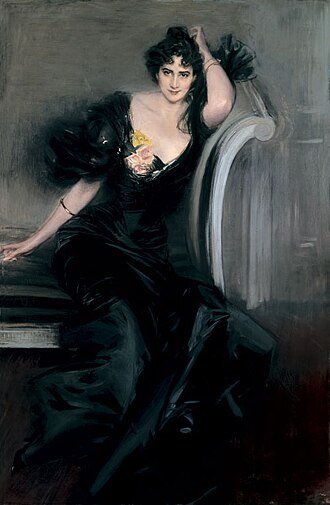


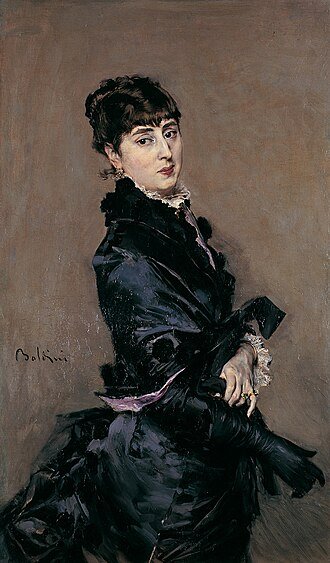


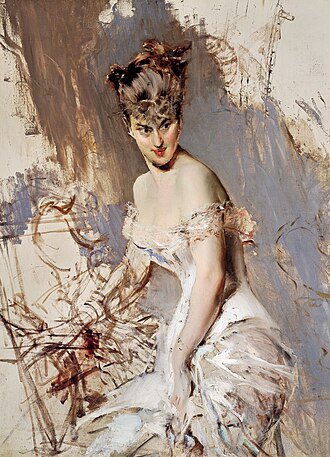
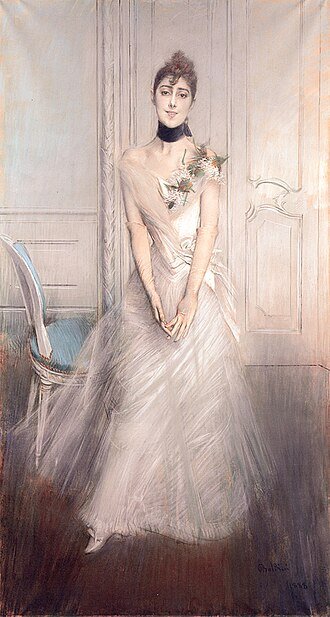


A full-length portrait of a woman dressed in shimmering satin and fur, with a shawl and a hat completing the outfit. Boldini, a sought-after portraitist of fashionable society, emphasizes the elongated silhouette and the movement of the fabrics rather than simply describing her features. Dated 1907, the work shows his loose, vibrant brushwork, which gives the figure an almost animated presence and reflects his fascination with the elegant fashion of the period.

Full-length portrait painted by Giovanni Boldini in 1903 in oil on canvas. The female figure stands upright, with an elongated silhouette and an elegant pose that the painter renders with quick, fluid brushstrokes. The work reflects Boldini's interest in a sitter caught in motion and in the lightness of fabrics. According to the record, the painting now belongs to a private collection.

Portrait of Marthe Bibesco, a Romanian princess and writer, painted in 1911 by Giovanni Boldini. With no further documentation available, the work can be seen as a full-length oil on canvas portrait in a tall, large format. Boldini was known for his loose, agile brushwork, a quality visible in the figure and the fabrics. The painting reflects the painter's taste for elegant portraits of the high society of his time.

A portrait of Luisa Casati, the Italian aristocrat known for her theatrical presence, painted by Giovanni Boldini in 1911. The sitter appears surrounded by peacock feathers, a motif linked to the marquise that heightens the staged character of the composition. Boldini worked with quick, fluid brushstrokes, and the contrast between the dress, the dark background and the shimmer of the feathers gives the image great energy. Based on the available information, no further details about the commission or its reception can be established.

Giovanni Boldini was an Italian painter who worked mainly in Paris, where he moved among portrait painters serving high society. His work is associated with a lively style, loose brushwork and a keen sense of movement and elegance in his figures. With the available record, it is not possible to determine with certainty the specific subject of this painting.

Portrait of the journalist and politician Henri Rochefort, painted by Giovanni Boldini in 1882 in oil on canvas. It is a single-figure portrait, a genre in which the painter concentrates on the sitter himself. The work is held at the Musée d'Orsay in Paris, an institution that houses much of nineteenth-century French painting.

Portrait of Florence Meyer Blumenthal, painted by Giovanni Boldini in 1896 in oil on canvas. The sitter appears full length, and the artist presents her with a light elegance, where the movement of the fabric and the loose, fluid brushwork stand out. The work reflects the taste for society portraiture at the end of the nineteenth century, a genre in which Boldini enjoyed great success.
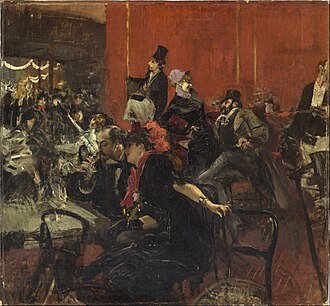
A banquet scene painted by Giovanni Boldini in 1889, at a time when the artist was working with confidence in portraiture and genre painting. The record offers no details about its commission or its figures, so it is best to stay with what is visible: a festive gathering rendered in loose brushwork, with light shaping the whole composition.
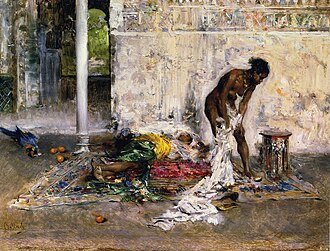
Oil on panel by Giovanni Boldini, dated 1873 and of small size. The title, After the Bath, suggests an intimate scene set after bathing. Nothing reliable is known about its commission or composition beyond this description, so any reading of the scene should remain tentative.
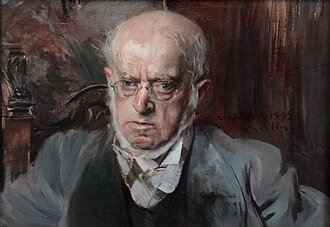
Portrait of Adolph von Menzel, painted by Giovanni Boldini in 1895. The small, intimate work shows the German artist with loose, quick brushwork typical of Boldini. Its handling of the face and background reveals a lively technique associated with late nineteenth-century society portraiture, and it is held at the Alte Nationalgalerie in Berlin.

Small oil-on-panel portrait dated 1900 by Giovanni Boldini. Its modest size and wooden support suggest a work of intimate character. Nothing is recorded about the sitter or the commission, so any reading of the sitter's identity or purpose remains unconfirmed. The painting is held by the Musée Carnavalet, the museum of Paris history.

Portrait of Céline Leclanché, painted by Giovanni Boldini in 1881 in oil on canvas. The available record offers no reliable details about who commissioned it, the setting in which it was made, or how it was received, so its circumstances cannot be confirmed. The work is held at the Clark Art Institute in the United States.
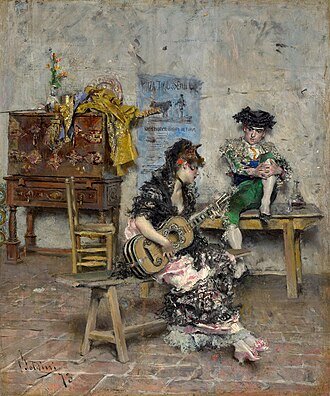
Painted in 1873 by Giovanni Boldini, this small oil on canvas presents a guitar player within a genre scene of everyday life. Information about its commission, original setting or possible symbolism is not available, so any reading should stay cautious and focus on what is visible: the figure, the instrument and the handling of light and colour.
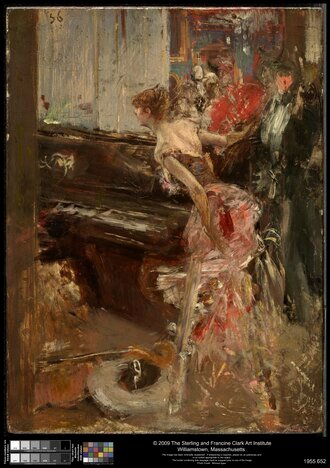
This small oil on panel by Giovanni Boldini, dated 1884, is titled Recital, which suggests a musical scene, though few details of the scene are known. Its modest size and panel support place it among intimate easel works. It is held by the Clark Art Institute.
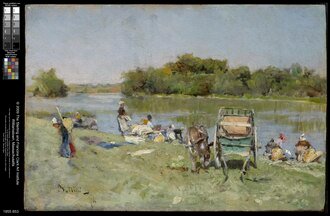
Small oil-on-panel work dated 1874, showing washerwomen at their everyday labor, a subject Giovanni Boldini treated on a reduced scale. Given its modest size and sketch-like handling, it was probably conceived as a study or intimate piece rather than a large composition. It is held at the Clark Art Institute, where it offers a compact view of working life.

A portrait of a boy painted by Giovanni Boldini in 1858, when the artist was still very young. This small oil on canvas is titled after Francesco Boldini, probably a relative of the painter. The work offers a glimpse of Boldini's early steps in portraiture, a genre that would occupy much of his career. With no further documentation available, these identifications should be treated with caution.
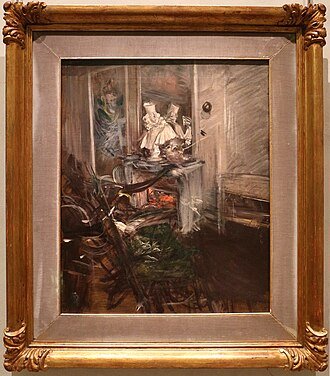
In 1909 Boldini painted the painter's room, where a sculpture known as the 'Cardinal', attributed to Bernini, seems to stand among everyday furnishings. The picture probably centres on this baroque piece within a private interior, and the contrast between old sculpture and domestic setting invites reflection on the painter's relationship with tradition.

Giovanni Boldini painted this self-portrait in 1911, when he was 69, as its title indicates. The oil-on-canvas work presents the painter in close view, with a direct gaze that conveys a steady presence. Based on the available information, the painting is held at the Museo Boldini, which is devoted to the artist.

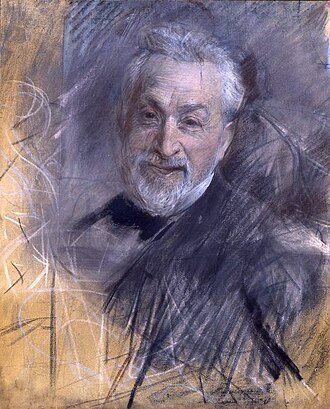
Portrait of Gaetano Braga, painted by Giovanni Boldini in 1888 and held in the Museo Boldini. Braga was a composer and cellist, and the picture presents him in an intimate half-length format against a dark background that draws attention to the face. The available information does not detail the commission or its exact context, but the work fits Boldini's portraiture, which focuses on the sitter's presence and character.

Giovanni Boldini painted Gladys Spencer-Churchill, Duchess of Marlborough, in 1916. The oil on canvas is now held at Blenheim Palace. Boldini was known for capturing the elegance and presence of his sitters, and here the figure's pose and bearing give structure to the composition.

Self-portrait showing Giovanni Boldini himself, dated 1892 and held at the Museo Boldini. Because self-portraits reveal how an artist chose to present himself, the work invites viewers to consider the image Boldini offers of his own identity. The available record says little about its commission, composition or technique.

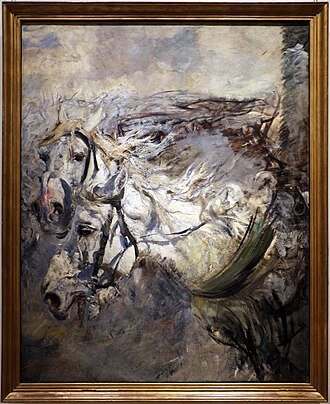
Painting by Giovanni Boldini dated 1880 and held in the Museo Boldini in Ferrara. Without reference texts available, its subject, commission and specific context cannot be stated with certainty. It belongs to an early phase of the painter's mature career, a period later associated with elegant portraiture and loose, energetic brushwork.


Portrait of Cristiano Banti, painted by Giovanni Boldini in 1865 and held in the Galleria d'arte moderna in Florence. The sitter appears with his cane, a detail that brings the figure closer to the viewer and shapes how his pose is read. The available information does not clarify further the scene, its commission, or the painter's intentions.

This painting by Giovanni Boldini is dated 1876 and is held in the Museo Boldini, a museum devoted to the artist. With the available information, it is not possible to say what it depicts, under what circumstances it was made, or what commission or purpose lay behind it. What can be said is its link to the painter, whose name gives the institution that keeps it its identity.

A small oil on panel dated 1873 by Giovanni Boldini. It shows a couple in Spanish costume beside two parrots, and its title refers to a matador. The available record offers no details about commission or original owner, so any reading of the scene should stay tentative. The pairing of traditional dress with exotic birds is its most striking feature.

Portrait of Giuseppe Abbati, painted by Giovanni Boldini in 1865 on a small panel. The sitter is shown half-length, with attention centred on the face and its expression, handled with direct brushwork and a restrained background. Given its modest size and intimate character, it seems conceived as a personal piece rather than a formal public portrait.

Portrait of Ignazio Boncompagni Ludovisi, painted by Giovanni Boldini in 1914. It belongs to the portrait genre and presents the sitter in an upright composition. The available record offers no further details about the commission, context or technique, so any closer reading of the painting must await additional sources.

Portrait of Lady Hanne Sophie Louise Wiborg, painted by Giovanni Boldini in 1903. The sitter wears an ermine fur, a detail that dominates the composition and that the painter renders with great skill in its texture and sheen. Boldini, known for his portraits of elegant figures, here blends a realist approach with the loose brushwork associated with Impressionism. The record also identifies her as a singer, a detail that invites us to read the painting as a portrait of a woman in public life.

This small panel from 1872 by Giovanni Boldini shows a rural scene with a peasant, his family, a plough and a dog in an open field. It is set in Combs-la-Ville, a French village linked to the painter during those years. The work is associated with the Macchiaioli movement, although the available information does not allow us to say more about its composition or reception.

Oil on panel by Giovanni Boldini, dated 1904. The record describes its subject as a curtain, while the English title refers to a red tent, so the motif is open to interpretation. Without further sources, the commission, setting and intended meaning of the painting cannot be confirmed, and any reading beyond what the work shows would be speculative.
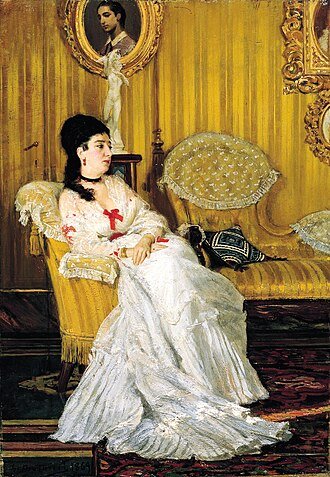

Boldini painted this portrait of Alaide Banti in 1885 on panel, in a narrow, small format. The sitter appears beside a fireplace, and the tall, slim composition focuses attention on her figure. The work is held by the Galleria d'arte moderna in Florence.
Where to see the work
- Museo Boldini Ferrara · 18
- Clark Art Institute Massachusetts · 6
- Musée d'Orsay Paris · 5
- Galleria Nazionale d'Arte Moderna e Contemporanea di Roma Rome · 3
- Galleria d'arte moderna Florence · 3
- Calouste Gulbenkian Museum Avenidas Novas · 1
- National Portrait Gallery London · 1
- Galleria d'arte moderna di Milano Milan · 1
- Musée des Beaux-Arts de Bordeaux Bordeaux · 1
- Musée des Arts Décoratifs Paris · 1
- Pinacoteca di Brera Milan · 1
- Frugone Collection Genoa · 1
- Galería Nacional de Arte Washington, D.C. · 1
- Alte Nationalgalerie Berlin · 1
- Musée Carnavalet Paris · 1
- Rome Metropolitan City of Rome · 1
Curiosities
A portrait hidden in a Paris flat
In late 2010 a Boldini portrait of his former muse, the French actress Marthe de Florian, was found in a Paris apartment that had gone almost seventy years without a visit. Hidden from view, the picture had never been listed, exhibited or published. Its owner, Florian's granddaughter, had moved to the south of France before the Second World War and never returned, although she kept paying the rent. A love note and a biographical reference helped confirm its authenticity. At auction it sold for 2.1 million euros, a record for the artist.
The Master of Swish
A 1933 article in Time magazine called him the Master of Swish, a nickname for his flowing, rapid way of painting. It highlights a quality his contemporaries valued: the ability to suggest silk, movement and light with brushstrokes that looked spontaneous. The label sums up why his society portraits were so easily recognised by the public of his day.
From the salon to the stage and the novel
Boldini appears as a character in the ballet Franca Florio, regina di Palermo, written in 2007 by the Italian composer Lorenzo Ferrero. The work tells the story of Donna Franca, a Sicilian aristocrat whose beauty inspired the painter and many other artists of the Belle Époque. The discovery of the portrait of Marthe de Florian in the empty flat also provided the background for Michelle Gable's 2014 novel A Paris Apartment.