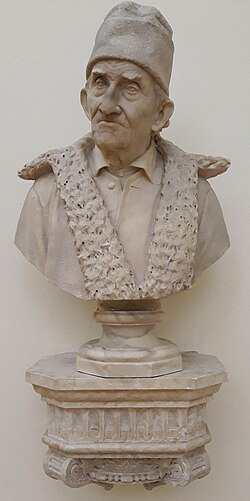
Girolamo dai Libri
1474–1555 · Veronese early Renaissance painter and illuminator
Girolamo dai Libri (probably Verona, around 1474 - 2 July 1555) was an illuminator of manuscripts and painter of altarpieces in the Veronese school of the early Renaissance. The son of the respected illuminator Francesco dai Libri, he learned the craft in the family workshop and probably also in that of Domenico Morone, where he befriended Morone's son Francesco. His early reputation came from miniatures made for the convent of Santa Maria in Organo. According to Vasari, at about twenty-five he astonished contemporaries with a Deposition strongly shaped by Mantegna. From the 1510s he absorbed Lombard and Roman influences, alongside a meticulously detailed landscape background inherited from his training as an illuminator. His best-known works include the Madonna dell'Ombrellino and the Madonna della Quercia, dated 1530 and 1533 and now in the Castelvecchio museum in Verona. His legacy lies in blending Mantegna's tradition with Venetian luminosity and in combining miniature technique with large canvases.
Works (15)
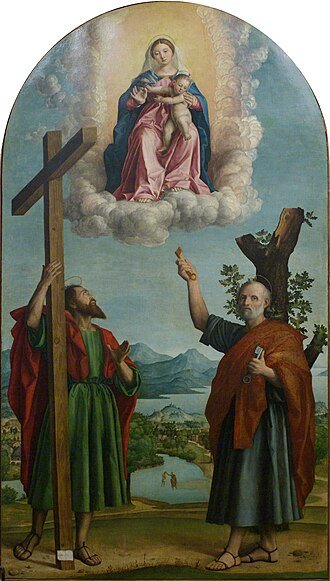
Oil on canvas from 1533 gathering the Virgin Mary and the Christ Child with the apostles Saint Peter and Saint Andrew. The background shows Lake Garda, setting the scene in a recognisable natural landscape. Its upright format and considerable size suggest a devotional image meant to command the viewer's attention. It is a religious work by the painter Girolamo dai Libri.

Religious painting by Girolamo dai Libri, dated 1530 and executed in oil on canvas. Its title, Madonna of the Umbrella, refers to an umbrella held in the scene, but its precise meaning cannot be established from the available information. The large vertical format suggests it was probably intended for a devotional setting of considerable scale.
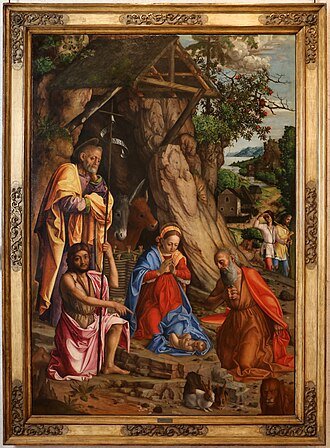
Oil on canvas dated 1500 by Girolamo dai Libri. It depicts the Nativity, with the Virgin Mary, Joseph, the infant Jesus, John the Baptist and Saint Jerome, alongside a rabbit. The available information says nothing about its commission or original setting, so the reading focuses on its religious iconography and the figures gathered around the Christ child.
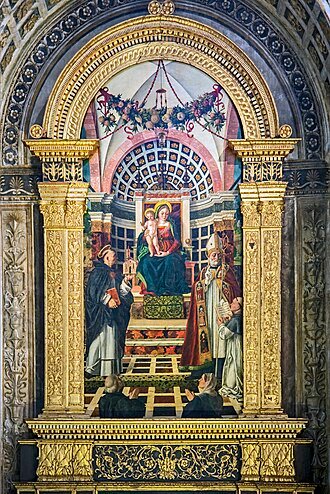
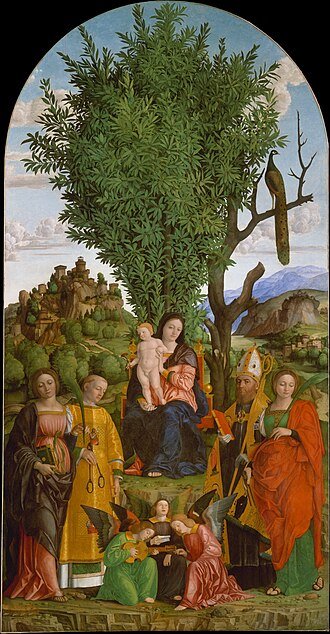
This large religious panel shows the Virgin Mary holding the Christ Child, accompanied by saints, in a composition meant for public devotion. Dated to around 1520 and attributed to Girolamo dai Libri, it combines tempera and oil on canvas. Its tall format, nearly four metres high, suggests it was designed for a substantial architectural setting.
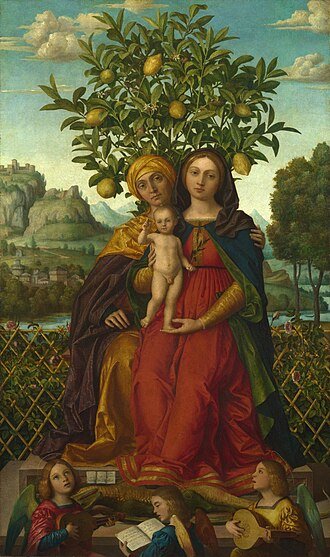
A work by Girolamo dai Libri, dated 1514, showing the Virgin and Child with Saint Anne, a figure traditionally linked to the mother of Mary. It is a religious painting in oil on canvas, in upright format, held at the National Gallery in London. The available record gives no information about its commission or original reception, so any more detailed interpretation should be approached with caution.

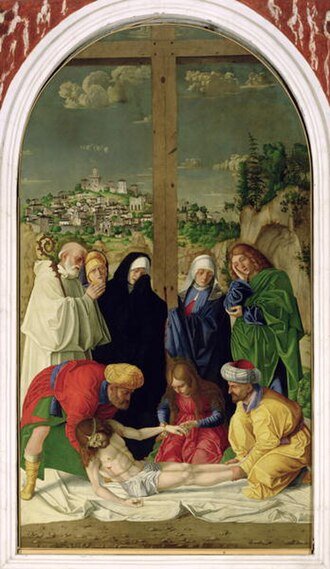
This Deposition, attributed to Girolamo dai Libri and dated around 1490, shows the moment when the body of Jesus is taken down from the cross. The figures include Mary Magdalene, John the Evangelist and other religious figures such as Helena of Constantinople, Scholastica and Benedict of Nursia, suggesting a scene with a strongly devotional character. The work, an oil on canvas of large upright format, is held in Saint Stephen church. Any details about its commission should be treated cautiously, as no further information is given.
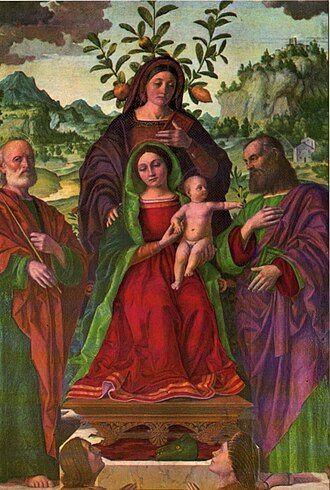

A religious work by Girolamo dai Libri, dated 1500 and painted in oil on canvas. The Virgin and Child appear with Saints Roch and Sebastian, figures often grouped in sixteenth-century images of protection against plague. The record suggests a devotional purpose. It is held in the Museo di Castelvecchio.
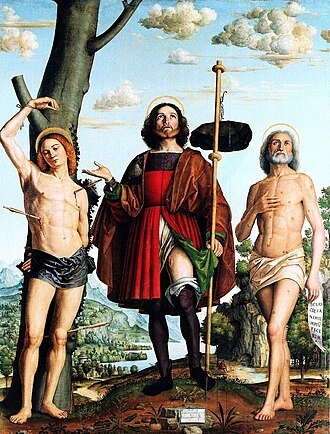
A work by Girolamo dai Libri, painted around 1510 in oil on canvas. It brings together three saints with a strong devotional character: Roch of Montpellier, Job and Sebastian of Milan, familiar figures in religious painting of the period, linked to protection against plague and to faith in adversity. The record offers no further details about its commission or composition, so it is best to focus on its subject and religious purpose.
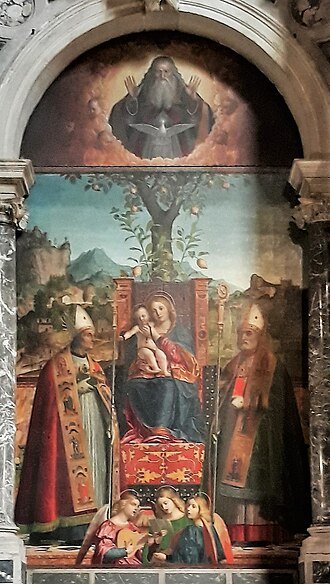
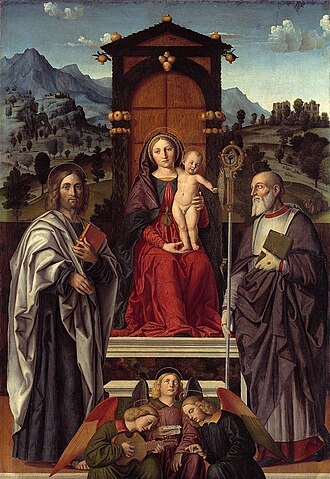
Girolamo dai Libri painted this work in 1526. It shows the Virgin and Child enthroned, flanked by Saints Lorenzo Giustiniani and Zeno of Verona. It is a devotional religious scene that brings together the Mother and Son with two figures of particular importance to the religious life of the area. The painting is kept in the church of San Giorgio in Braida.
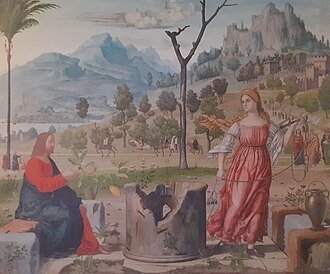
The scene shows the meeting between Jesus of Nazareth and a Samaritan woman beside a well, where their conversation about water takes on a spiritual meaning in Christian tradition. Girolamo dai Libri painted it in 1510 in oil on canvas, on a large scale. The work belongs to religious art and is held at Santa Maria Maggiore.

Oil on canvas dated 1520 and attributed to Girolamo dai Libri, the painting shows the Virgin Mary holding the Christ Child, a subject common in religious art of the period. The available information does not specify its commission or context, so it is best to focus on what the image itself presents.
Where to see the work
- Castelvecchio Museum Verona · 6
- Gemäldegalerie Berlin Berlin · 1
- Metropolitan Museum of Art New York City · 1
- National Gallery London · 1
- San Giorgio in Braida Verona · 1
Curiosities
A Deposition at twenty-five
According to Vasari's account, Girolamo astonished his contemporaries when, at about twenty-five, he painted a Deposition from the Cross for the church of Santa Maria in Organo. The work shows a very visible debt to Andrea Mantegna, the model the painter would return to years later in his most celebrated canvases.
A saint against plague
The altarpiece of the Virgin with Saints Roch and Sebastian is linked to the epidemic that struck Verona between 1510 and 1512, since Saint Roch was invoked as protector against plagues. Some scholars also suggest that the painter's wife may have died in that outbreak, though this cannot be confirmed.
Organ shutters by contract
The contract signed in November 1515 for the shutters of the organ at Santa Maria in Organo required them to be «beautiful and laudable to those who understand the art». Morone and dai Libri worked together, and modern critics believe they shared the task in close harmony. Vasari and Carlo Del Bravo, however, assign the parts to the two painters in opposite ways.