Jerónimo Cósida was a Spanish Renaissance painter, active mainly in the province of Zaragoza during the second half of the sixteenth century. Although he also worked as a sculptor, architect and goldsmith, his main output was mural painting and altarpieces, and he is said to have decorated more than twenty-five of them, though most have been lost. He is credited with introducing Raphaelism to Spain, probably through his training in Valencia with Vicente Masip, since he never travelled to Italy.
His early surviving works include panels from the 1530s, such as those at Bulbuente and the altarpiece in Tarazona. Over time his language moved towards a Mannerism that absorbed Raphael and Leonardo da Vinci, as seen in the Nativity of Saint John the Baptist at the Aula Dei Charterhouse, painted around 1580. His female figures, meticulous detail and elegant gestures are easily recognised. The archbishop Hernando de Aragón, his main patron, allowed him to work at the Seo cathedral in Zaragoza and to maintain his own workshop.
His legacy lies in renewing Renaissance painting in Aragon, where he shared the spotlight with the Italian Tomás Peliguet.
Works (2)
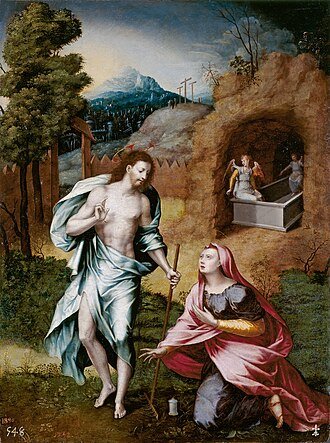

This oil-on-panel painting of 1578 depicts the birth of Saint John the Baptist, a subject common in religious art of the period. It is held at the Museo de Zaragoza and is attributed to Jerónimo Cósida. Without further documentary references at hand, it is best to confine ourselves to what the work itself shows: a domestic scene of sacred character painted on wood.
Where to see the work
- Museo del Prado Madrid · 1
- Saragossa Museum Zaragoza · 1