Ludovico Mazzolino, also known as Mazzolini da Ferrara, was an Italian Renaissance painter active mainly in Ferrara, where he was born in 1480 and where he probably died around 1528, possibly during a plague. He is best remembered for small devotional panels and for a style that departed from the classicism favoured by many of his contemporaries.
He is thought to have trained in the workshop of Ercole de' Roberti and later in Bologna with Lorenzo Costa. His first major commissions were large frescoes, all now lost, including those for Santa Maria degli Angeli in Ferrara, commissioned by Duke Ercole I d'Este. From about 1510 he concentrated on small devotional pictures, such as the triptych in Berlin (1509), which shows the influence of Costa and of Lorenzo Lotto.
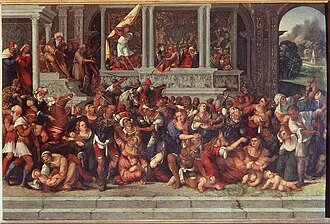
His hard, somewhat archaic manner gave way to crowded, energetic compositions with caricature-like details, as in the turbulent Massacre of the Innocents in the Uffizi. Around 1520 he took on Raphaelesque features from Garofalo and Dosso Dossi, but never made a decisive break into a new style. His legacy is that of an idiosyncratic painter who worked apart from the dominant innovations of his age.
Works (15)

This small oil on panel by Ludovico Mazzolino, dated 1522, gathers the Virgin and Child with Saint Anne, Saint Joachim and Saint John the Evangelist in a compact space, following the sacra conversazione format. No further details about its commission or history are recorded, so it is best to describe what the painting shows: a close group of sacred figures arranged in an intimate, contained way typical of devotional imagery of the period.
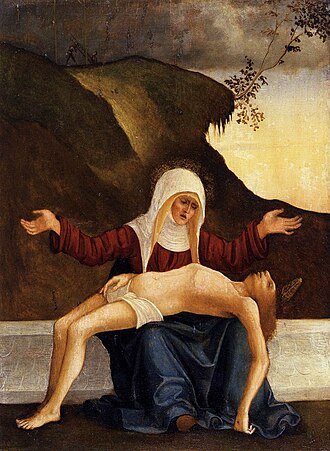
A small oil-on-panel work by Ludovico Mazzolino, dated to 1510, showing a Pietà: the Virgin Mary holding the dead body of Jesus of Nazareth. It is a common subject in religious art, and its small format suggests private devotion. The record offers no further details about its composition or commission.
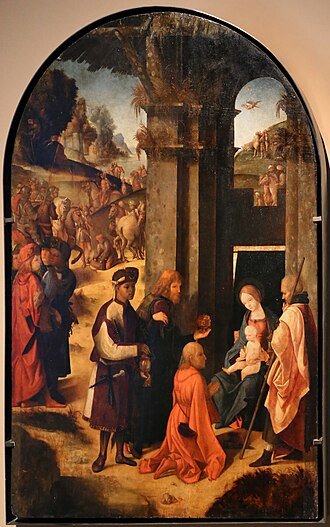
This panel, dated 1550 and attributed to Ludovico Mazzolino, shows the Adoration of the Magi, the moment when the visitors from the East pay homage to the newborn child. As a religious subject, it was probably intended for devotional settings. Without further reference material, its original commission and context cannot be established with certainty.
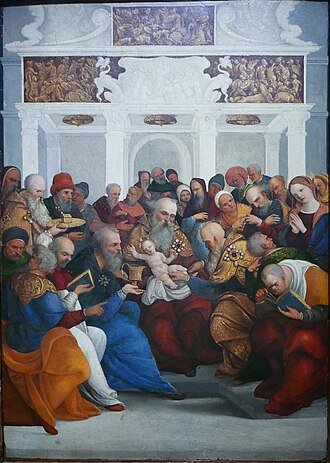
This small oil on panel by Ludovico Mazzolino, dated 1522, depicts the Circumcision of Christ, an event that Christian tradition places in the Infant Jesus's early life. Given its modest size, it was probably meant for private devotion rather than a large altarpiece. Without further sources, its composition, commission and later history cannot be confidently described.

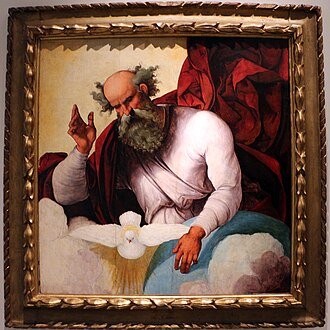
A work by the painter Ludovico Mazzolino, held at the National Picture Gallery of Bologna. The available record does not specify the subject or the date of execution, so it is not possible to say with certainty what it depicts or the circumstances of its creation. Mazzolino was an artist working in northern Italy during the late Renaissance.

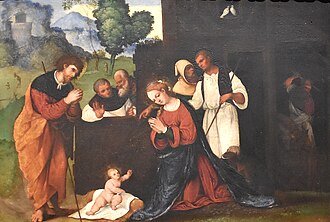
This work by Ludovico Mazzolino depicts the Adoration of the Shepherds, one of the recurring episodes of the Nativity in religious painting. It is a devotional scene in which the shepherds come to pay homage to the newborn child. Based on the available information, little more can be stated with confidence about the circumstances of its commission or its early reception.
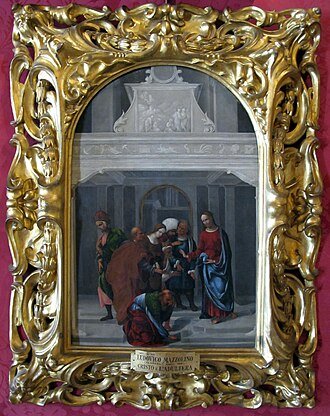
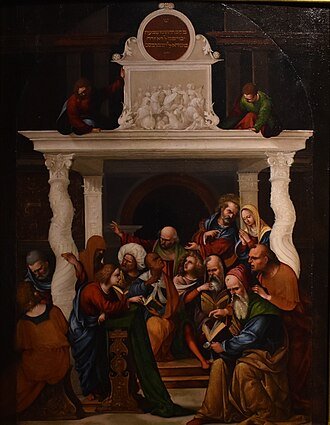
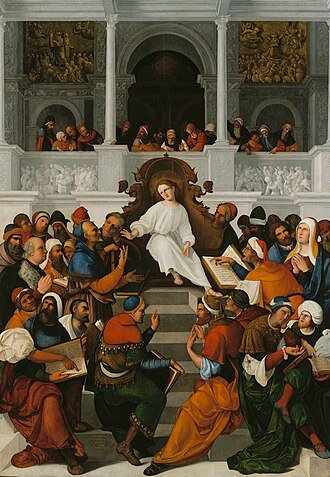
This panel depicts the Gospel episode of Jesus among the doctors, in which the boy is shown debating with the teachers of the Temple in Jerusalem. The work is held in the Doria-Pamphili Gallery and is attributed to Ludovico Mazzolino. Beyond these basic facts, the record offers no further details about its commission, composition or technique.
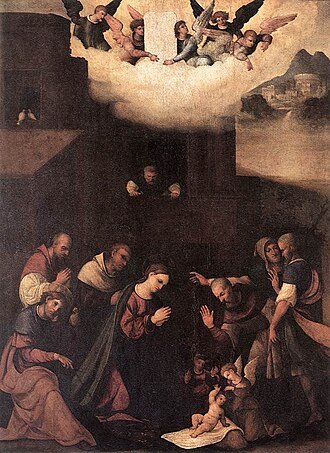
A religious work by Ludovico Mazzolino, dated 1520 and painted in oil on panel. It depicts the adoration of the Christ Child, with the Virgin Mary, a woman and a young boy gathered around the infant. Without further sources, it is best described cautiously: it is held in the Uffizi Gallery in Florence.
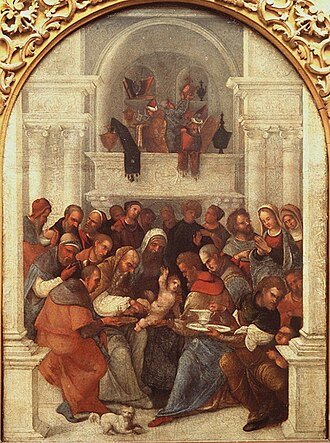
A work by Ludovico Mazzolino, dated 1525 and painted in oil on panel. It depicts the Circumcision of Jesus, a religious episode featuring the Virgin Mary, the Child, another woman and a young boy. Given its small size, it was probably intended for private devotion. The record offers no further details about its commission or history, so it is best to stick to what the scene shows.

Christ before Pilate is an oil on panel by Ludovico Mazzolino, dated 1530 and held in the Fitzwilliam Museum. It belongs to religious art and depicts the gospel episode in which Jesus stands before Pilate. The available information does not record the commission or its original location, so any reading of the work should remain cautious.
Where to see the work
- Uffizi Gallery Florence · 4
- Cini Palace Gallery Venice · 3
- Pinacoteca Nazionale di Bologna Bologna · 2
- Musée du Petit Palais Avignon · 1
- Fondazione Magnani-Rocca Traversetolo · 1
- Galleria Palatina Florence · 1
- Galleria Doria Pamphilj Rome · 1
- Gemäldegalerie Berlin Berlin · 1
- Fitzwilliam Museum Cambridge · 1
Curiosities
Lost frescoes
Much of his mural work has disappeared. Records show that in 1504 he received a first payment for frescoes in the eight chapels of Santa Maria degli Angeli in Ferrara, destroyed in 1604, and that between 1505 and 1507 he was paid for decorative work in the apartments of Duchess Lucrezia Borgia in the Este castle, of which no trace survives. Only his devotional panels remain.
A marriage to a Venetian painter's daughter
According to the sources, in 1521 he married Giovanna, daughter of Bartolomeo Vacchi, a Venetian painter. It is one of the few personal details that survive about the artist, whose life is poorly documented.