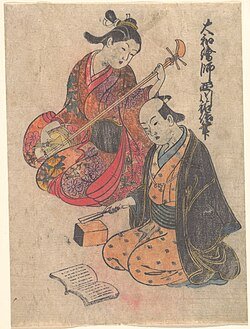
Nishikawa Sukenobu (1671-1750) was a Japanese ukiyo-e painter and printmaker from Kyoto, the former imperial capital. He was unusual for the genre, which was centred mostly on Edo, modern Tokyo, so his work offers a different view of the prints of his era.
He trained in painting under Kanō Einō of the Kanō school and may also have studied with Tosa Mitsusuke of the Tosa school. His earliest known works are book illustrations dated to 1699. Although he made prints of actors, he became best known for his images of women from different social classes in everyday life. His Hyakunin joro shinasadame (Appreciating 100 Women), published in two volumes in 1723, showed women from empresses to prostitutes and was well received.
He also produced kimono pattern books, in which he revived the bon hinagata layout and introduced dyeing techniques using hand-painted silk. His style, with soft, rounded figures and simple but clearly structured compositions, influenced Suzuki Harunobu, Kitao Shigemasa, Chōbunsai Eishi and Kitagawa Utamaro. He died in Kyoto in 1750, and his work is held in many museums in Japan, the United States and elsewhere.
Works (2)
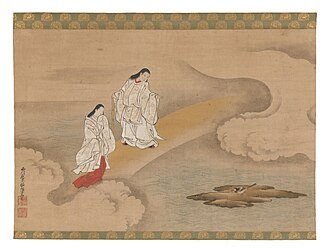
Painted by Nishikawa Sukenobu in 1725, this work depicts the deities Izanagi and Izanami, central figures of Japanese mythology. The image is identified as a goddess, so the female figure is the safest reading of the scene. Details about its composition, technique, or commission are not documented well enough to say more.
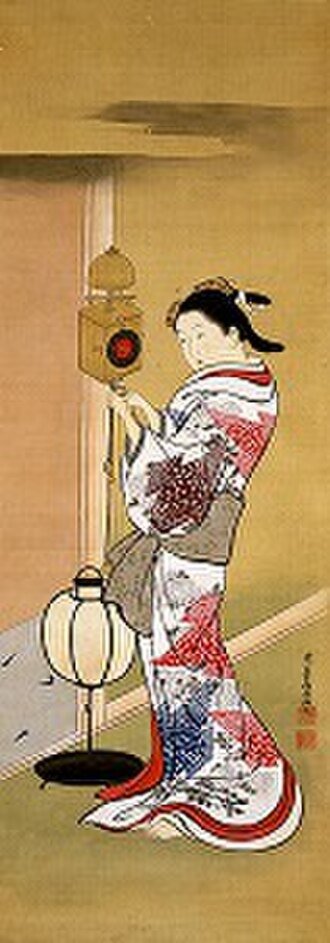
This work belongs to the bijin-ga genre, which portrays elegant women in everyday life, and to the nikuhitsu-ga category, meaning it is a hand-painted brushwork piece rather than a printed copy. It is attributed to Nishikawa Sukenobu and dated 1800. The wall clock named in the title hints at an interest in domestic settings and the passing of time, though the available information does not clarify its commission or intended meaning.
Where to see the work
- Metropolitan Museum of Art New York City · 1
- Tokyo National Museum Tokyo · 1
Teachers and pupils
Studied with
- Kanō Einō 1631–1697