Daphnephoria
Frederic Leighton, 1876
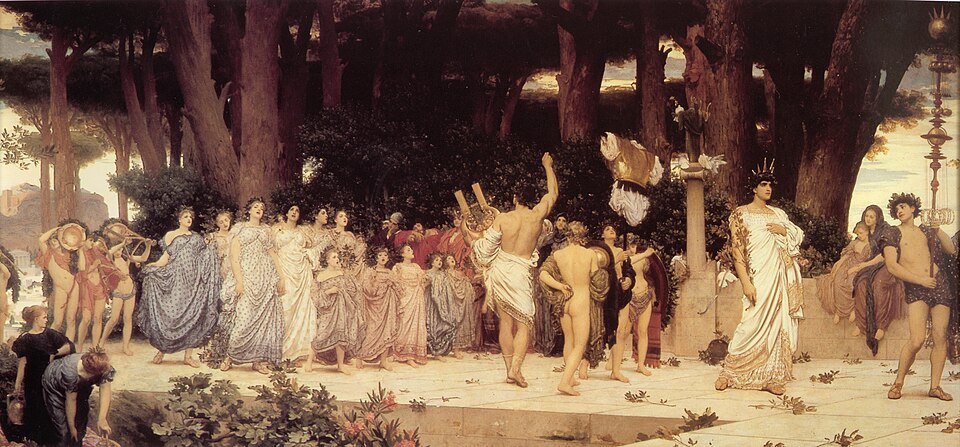
Daphnephoria is an oil on canvas by Frederic Leighton, first shown at the Academy exhibition of 1876. It depicts a triumphal procession that took place every ninth year at Thebes in honour of Apollo, the god to whom the laurel was sacred, and which also commemorated a Theban victory over the Aeolians of Arne. Returning to a classical subject, Leighton's composition recalled for critics his early successes, such as Cimabue's Madonna and The Syracusan Bride, which also featured large processions. Thirty-six figures fill the canvas: standard-bearers, young men carrying armour, rows of maidens and boys with tripods, while in the foreground two girls draw water from a well. Stewart Hodgson commissioned the work, paying £1,500, and Leighton gave him all the preparatory studies. It later passed to Lord Leverhulme and, in 1922, to the Lady Lever Art Gallery. Reactions were divided at the time, though Edgcumbe Staley regarded it as the painter's great masterpiece.
- Painter
- Frederic Leighton
- Date
- 1876
- Medium
- oil paint, canvas
- Dimensions
- 231 × 525 cm
- Museum
- Lady Lever Art Gallery, Liverpool
- Movement
- Pre-Raphaelite Brotherhood
- Depicts
- Daphnephoria
More works by Frederic Leighton


