Perseus and Andromeda
Frederic Leighton, 1891
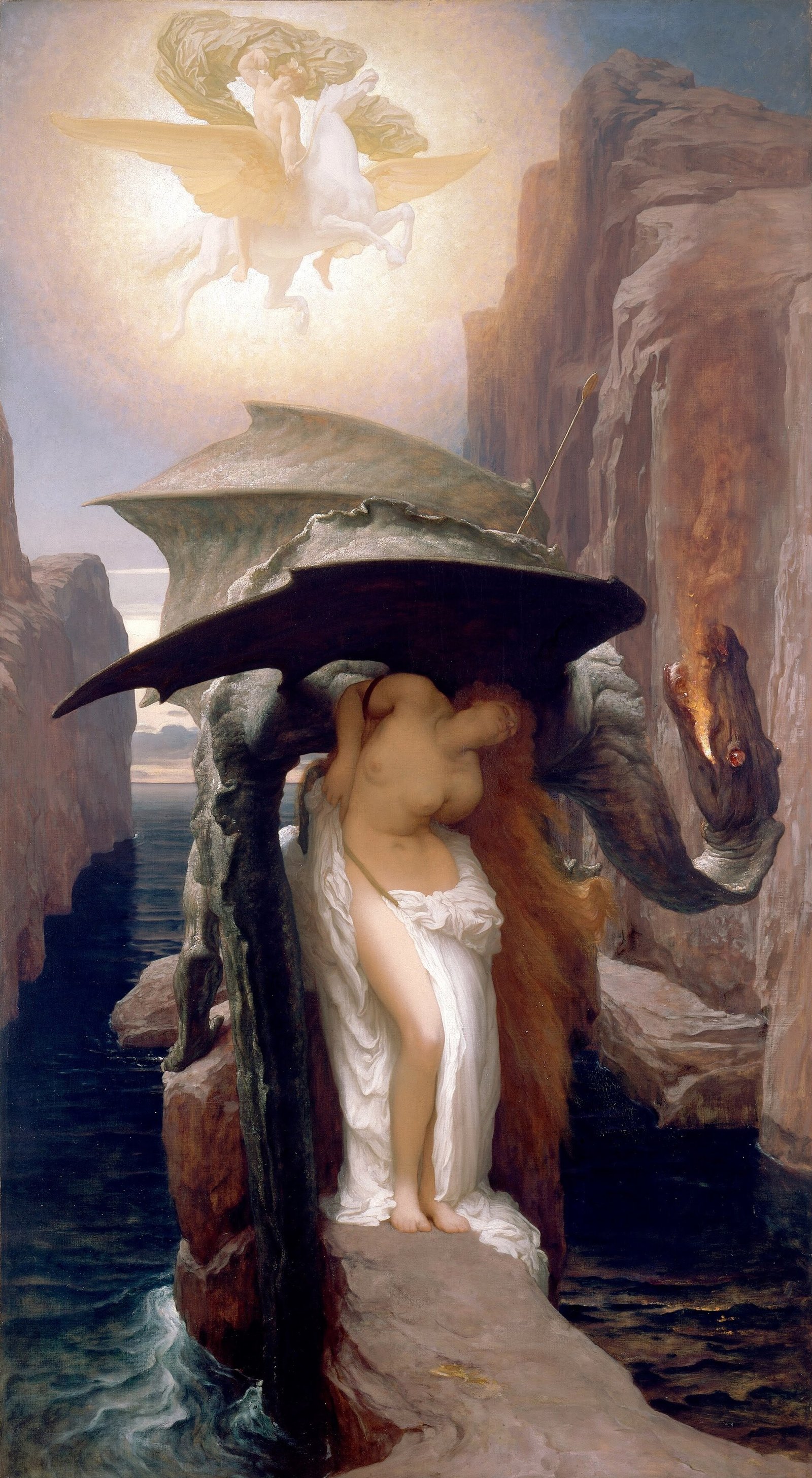
Perseus and Andromeda is one of Frederic Leighton's mythological paintings, completed in 1891 and shown that same year at the Royal Academy. It depicts the moment when Perseus, returning home after defeating Medusa, rescues Andromeda, the princess offered as a sacrifice to a sea monster sent as punishment for her mother Cassiopeia's vanity. Leighton set the scene on a rocky shore but handled it in a Gothic manner rather than a classical one. The composition is carefully built: Perseus flies over Andromeda's head on the winged horse Pegasus and shoots an arrow that strikes the beast, which turns its head toward the hero. The pale figure of the princess, almost naked and chained to the rock, stands out against the dark, jagged mass of the monster, while a halo of light links horse and rider to her body. Leighton first worked out the figure in a small sculpture, which he draped with wet cloth to study the folds. The result is a dramatic and highly finished picture, in which light and the contrast of forms sustain the sense of imminent danger.
- Painter
- Frederic Leighton
- Date
- 1891
- Medium
- oil paint, canvas
- Dimensions
- 235 × 129 cm
- Museum
- Walker Art Gallery, Liverpool
- Movement
- Pre-Raphaelite Brotherhood
- Genre
- mythological painting
- Depicts
- Perseus, Andromeda, dragon
More works by Frederic Leighton


