Judgement of Cambyses
Gerard David, 1498
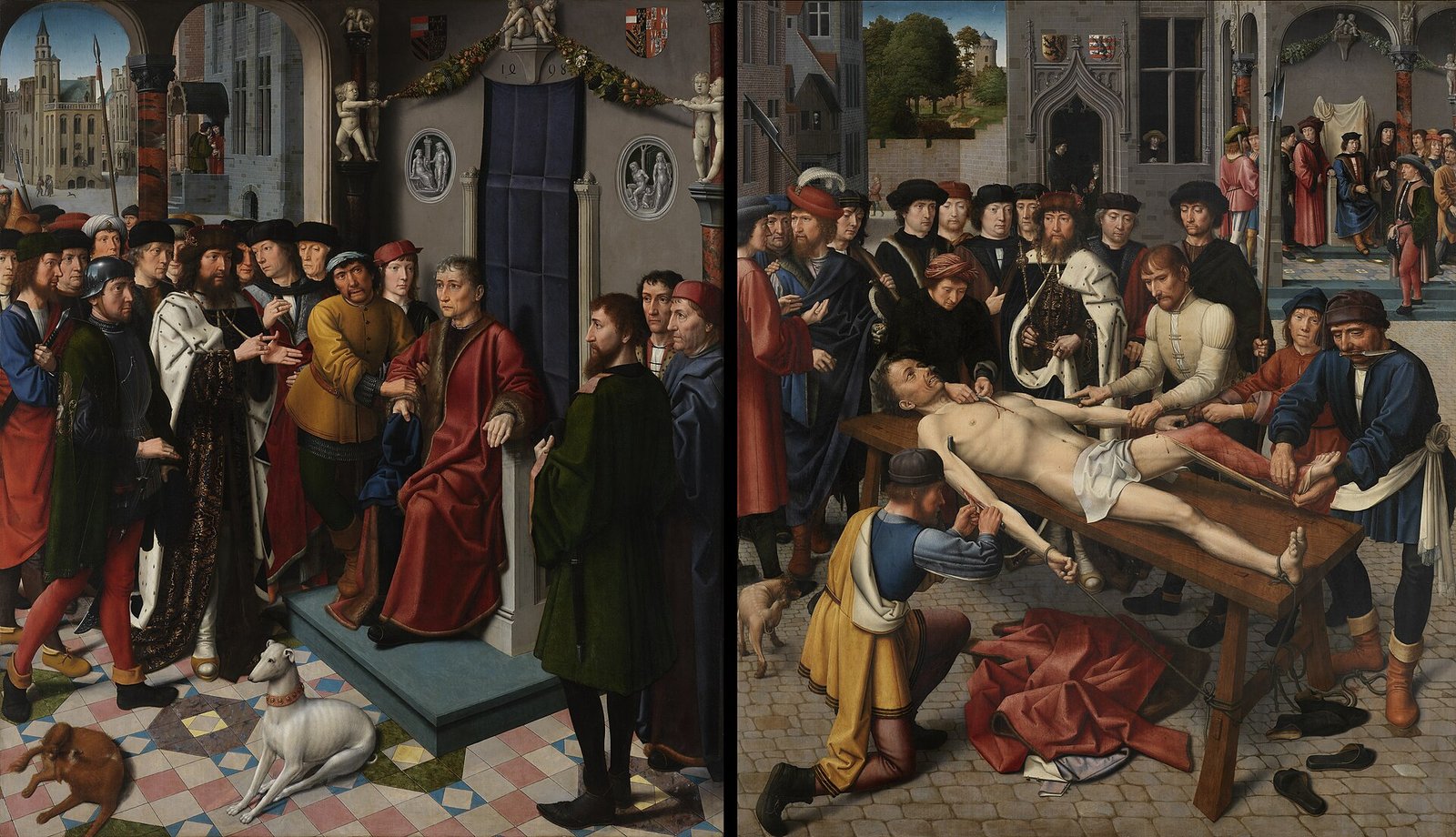
The painting recounts an episode Herodotus records in his Histories: the Persian king Cambyses II orders the arrest and flaying of Sisamnes, a corrupt judge who had accepted bribes. David conceived it as an oil diptych on oak panels, one of the few of his works that does not rest on traditional religious themes. The commission probably came around 1487-1488 from the municipal authorities of Bruges, who wanted panels for the deputy burgomaster's room in the town hall. The archives first refer to it as The Last Judgement. It was understood as a warning to magistrates about honesty in office, and it has also been linked to the imprisonment of Maximilian I in Bruges in 1488, read as a symbolic public apology. In the upper right corner of the flaying scene, Sisamnes' son dispenses justice from his father's chair, now draped with the flayed skin. Centuries later, the image became a form of protest: activists showed it to judges reviewing politically charged cases, including Yulia Timoshenko's and one connected to the Bolotnaya Square affair.
- Painter
- Gerard David
- Date
- 1498
- Medium
- oil paint, panel, oak panel
- Dimensions
- 182 × 319 cm
- Museum
- Vlaamse Kunstcollectie
- Movement
- Early Netherlandish painting
- Genre
- justice panel
- Depicts
- skin, flaying, Bruges, torture, dog, coat of arms, judge, Cambyses II
More works by Gerard David


