Prison Interior
Francisco Goya, 1815
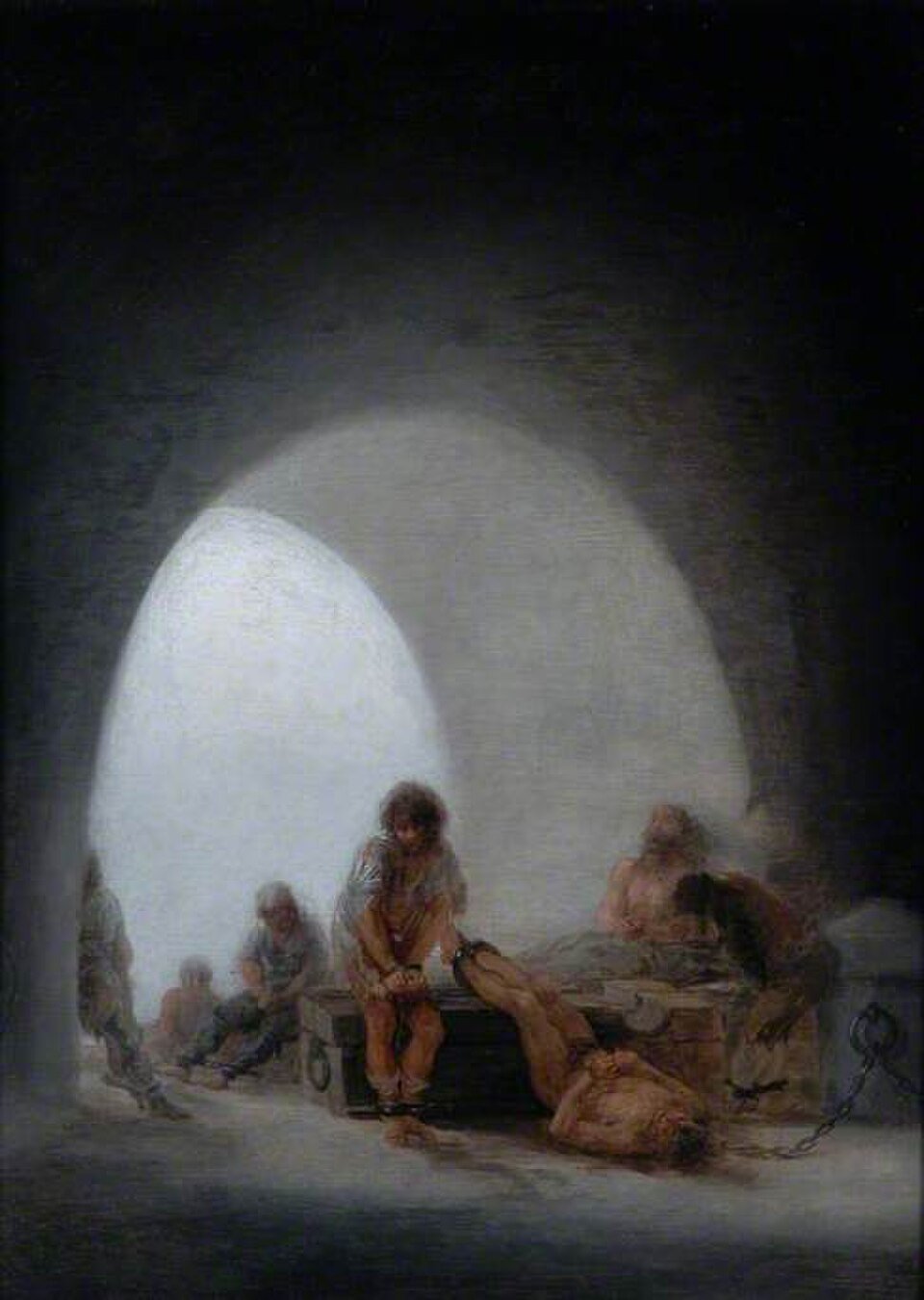
Prison Interior is a small oil-on-canvas painting in which Francisco de Goya depicts an enclosed, gloomy space occupied by confined figures who seem isolated from one another. The scene conveys confinement rather than care. In the period when Goya made works of this kind, asylums often functioned as places where people with mental illness were set apart from society, with little real effort to understand, classify or treat their condition.
The painting belongs to a small group of scenes set in institutions for the mentally ill that Goya produced at different points in his career, including Yard with Lunatics and related compositions on the same theme. Within that group, the light stands out most. A dim, cold glow fills the room and gives it the feel of purgatory, an in-between place with no visible exit, where time seems suspended.
The date of execution is not settled. The catalogue entry gives 1815, while other proposals place the work in 1793 and 1794, which would make it contemporary with Yard with Lunatics. The difference matters for understanding its context. Its subject is often linked to the lifelong concern with reason and madness that runs through Goya's work, but such biographical readings are interpretations rather than documented facts about this picture, and they should be held loosely.
What makes the scene unsettling is the combination of confinement, half-darkness and an almost spectral atmosphere. Goya offers no clear narrative or explicit message. Instead he places the viewer before a scene of abandonment that suggests the anguish of people living shut away with no prospect of cure. For this reason the painting is regarded as an important part of the artist's critical view of marginalisation and psychological suffering.
- Painter
- Francisco Goya
- Date
- 1815
- Medium
- oil paint, canvas
- Dimensions
- 43 × 32 cm
- Museum
- Bowes Museum, Barnard Castle
- Genre
- genre art
- Depicts
- psychiatric hospital, prison
More works by Francisco Goya


