Irises screen
Ogata Kōrin
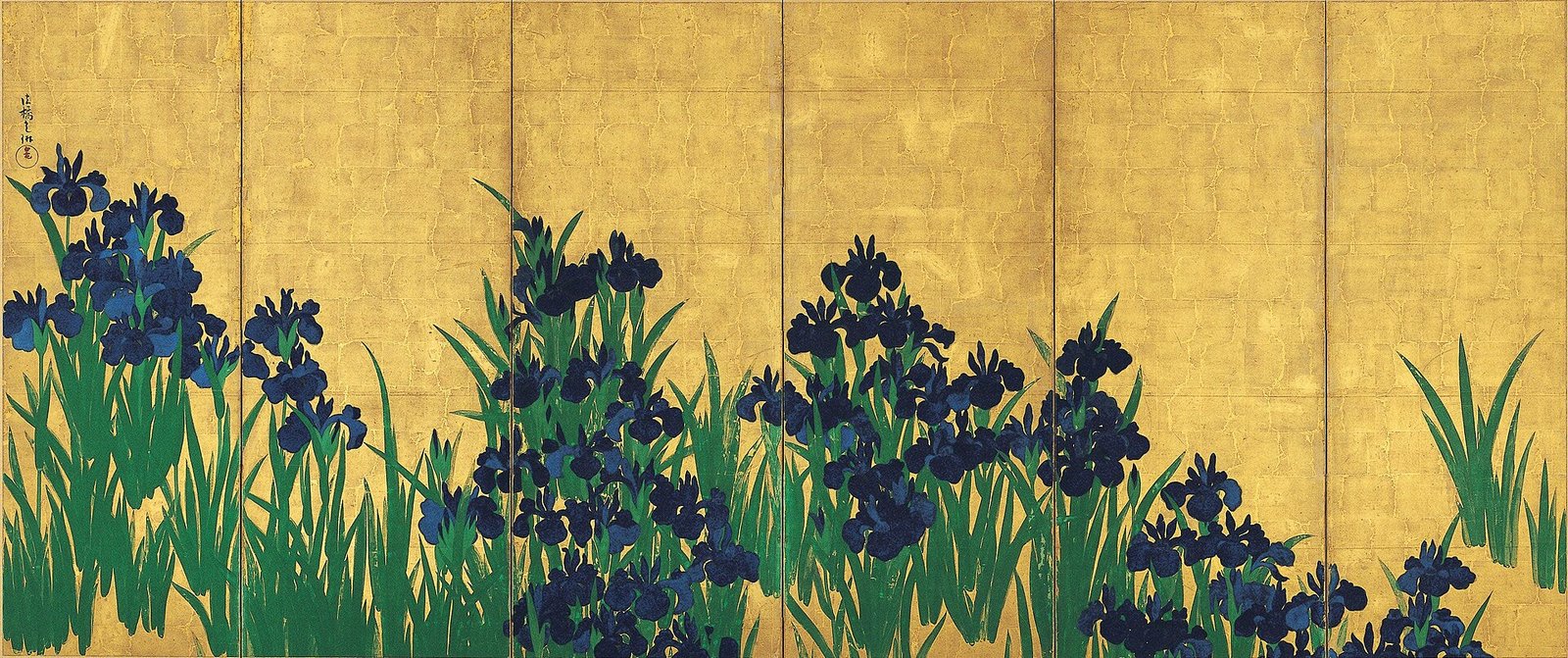
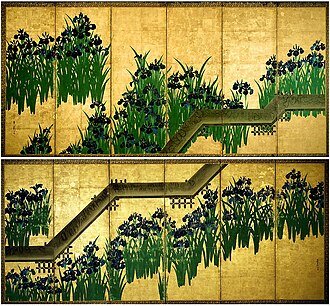
This six-panel folding screen pair by Ōgata Kōrin belongs to the Rinpa school and is probably dated to around 1701-1705, during the flourishing of luxury culture known as Genroku in the Edo period. Its subject is the Japanese iris, Iris laevigata, rendered in an almost abstract way: clusters of blue blooms and green foliage that repeat with a rhythm yet vary from panel to panel. The palette is deliberately restrained, limited to ultramarine blue, green and a gold ground, with gold leaf squares placed around the painted areas so the surface shimmers and suggests water. The deep blue comes from powdered azurite. Similarities between some flowers suggest a stencil was used. The screens draw on an episode of The Tales of Ise, in which a poem built on the opening syllables of the flower's name is the central motif. Kōrin painted them shortly after reaching the rank of Hokkyō, and the work is thought to show the influence of Tawaraya Sōtatsu. Copies of these screens are believed to have influenced Vincent van Gogh's own irises.
- Painter
- Ogata Kōrin
- Museum
- Nezu Museum, Tokyo
- Movement
- Rimpa school
- Depicts
- Iris laevigata
More works by Ogata Kōrin