Rough Waves
Ogata Kōrin, 1706
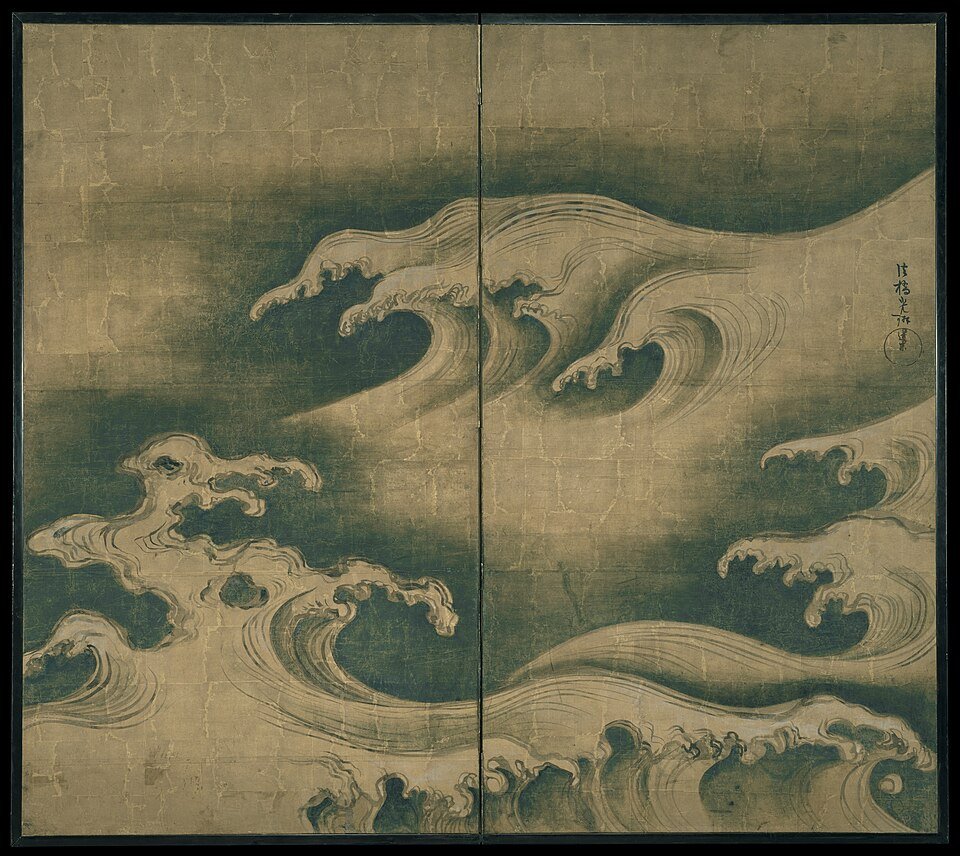
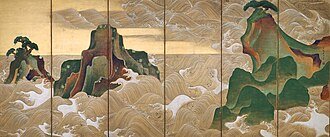
Rough Waves is a two-panel folding screen by Ōgata Kōrin, dated by recent studies to around 1704-1709, when the artist was living in Edo, today's Tokyo. It shows a swirl of stormy sea waves, rendered with an intensity that is unusual for the painter. To achieve this, Kōrin used an ancient Chinese method of drawing with two brushes held together in one hand. The wave crests, elongated and sharply contoured, resemble fingers or dragon claws, and the expressive force rests almost entirely on the lines of ink. The screen bears the seal "Dōsū", a pseudonym Kōrin used from 1704. His work of this period is shaped by the Kanō school, and the image may draw on Sesson Shukei, while also reflecting Tawaraya Sōtatsu, yet it stands as Kōrin's own reading of the sea's frightening power. It matters because it prefigures the sea imagery that Hokusai would later make famous in The Great Wave off Kanagawa. Kōrin's follower Sakai Hōitsu was impressed by it and created his own work, Waves, in 1805.
- Painter
- Ogata Kōrin
- Date
- 1706
- Medium
- washi, gold leaf, distemper, inkstick
- Dimensions
- 146 × 165 cm
- Museum
- Metropolitan Museum of Art, New York City
- Genre
- byōbu-e
- Depicts
- wind wave
More works by Ogata Kōrin