Bubbles
John Everett Millais, 1886
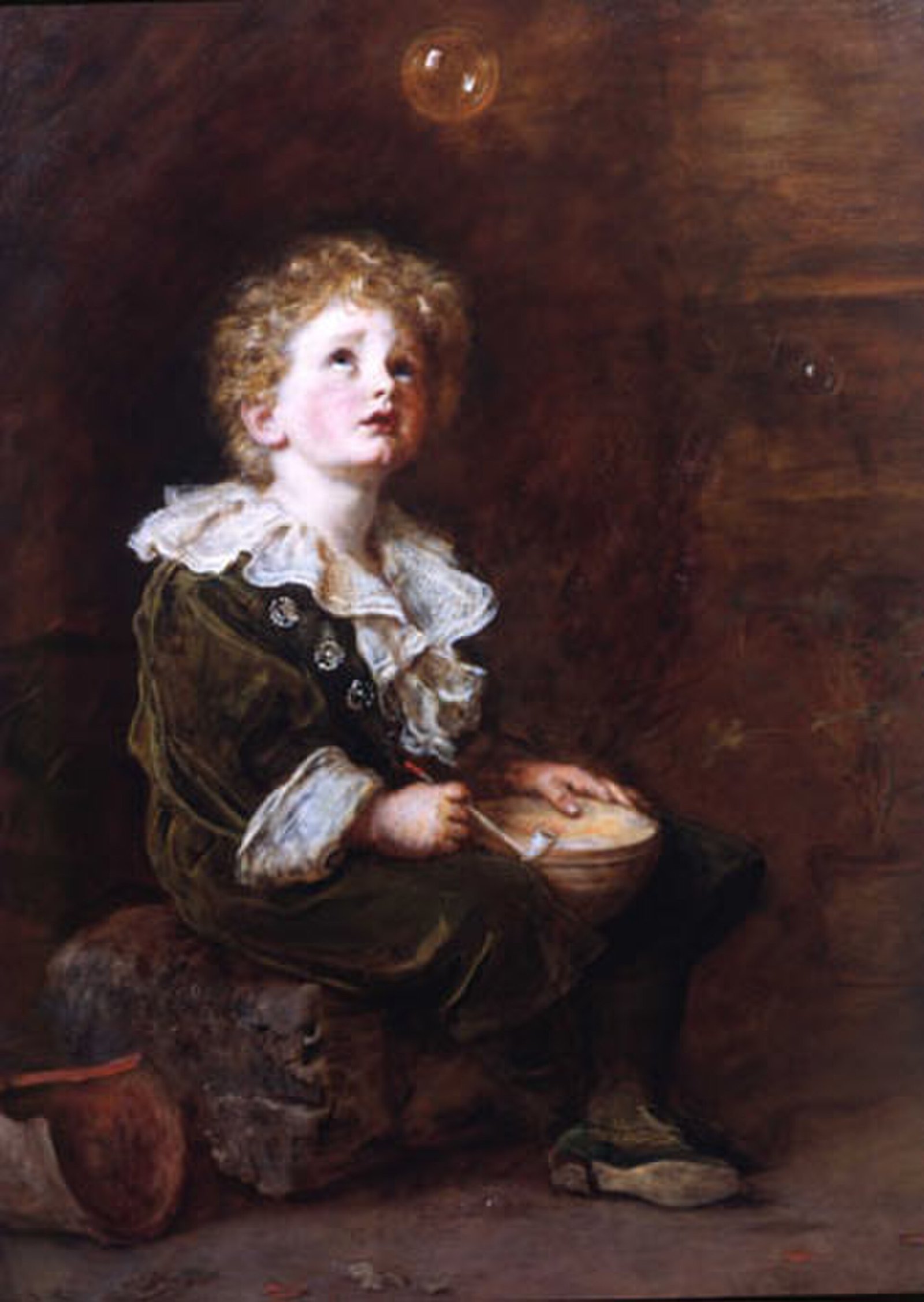
Bubbles, originally titled A Child's World, is an 1886 painting by John Everett Millais, associated with the Pre-Raphaelite Brotherhood. His model was his five-year-old grandson, William Milbourne James, and the picture draws on seventeenth-century Dutch vanitas imagery, which reflected on the fleeting nature of life. Boys blowing bubbles were often shown beside skulls and other symbols of death. Millais adapts that scheme with a gentler note: a golden-haired boy gazes up at a bubble, a symbol of the fragile beauty of existence. To one side a young plant grows in a pot, an emblem of life, while on the other a broken pot lies fallen, an emblem of death. The figure stands out against a dark background.
Its later fame came from a commercial venture. After being reproduced in an illustrated newspaper, the soap manufacturer Pears bought the original and acquired the rights to the image, which was altered to include a bar of soap. Millais, at first reluctant, eventually accepted the idea, which showed the soap as the means by which the child made the bubbles. The advertisement sparked a lasting debate about the boundary between art and advertising. The novelist Marie Corelli criticised it harshly, though she later retracted her remarks. The boy himself became known as "Bubbles" for the rest of his life. The painting is now held at the Lady Lever Art Gallery in Port Sunlight.
- Painter
- John Everett Millais
- Date
- 1886
- Museum
- Lady Lever Art Gallery, Liverpool
- Movement
- Pre-Raphaelite Brotherhood
More works by John Everett Millais