Ophelia
John Everett Millais, 1851
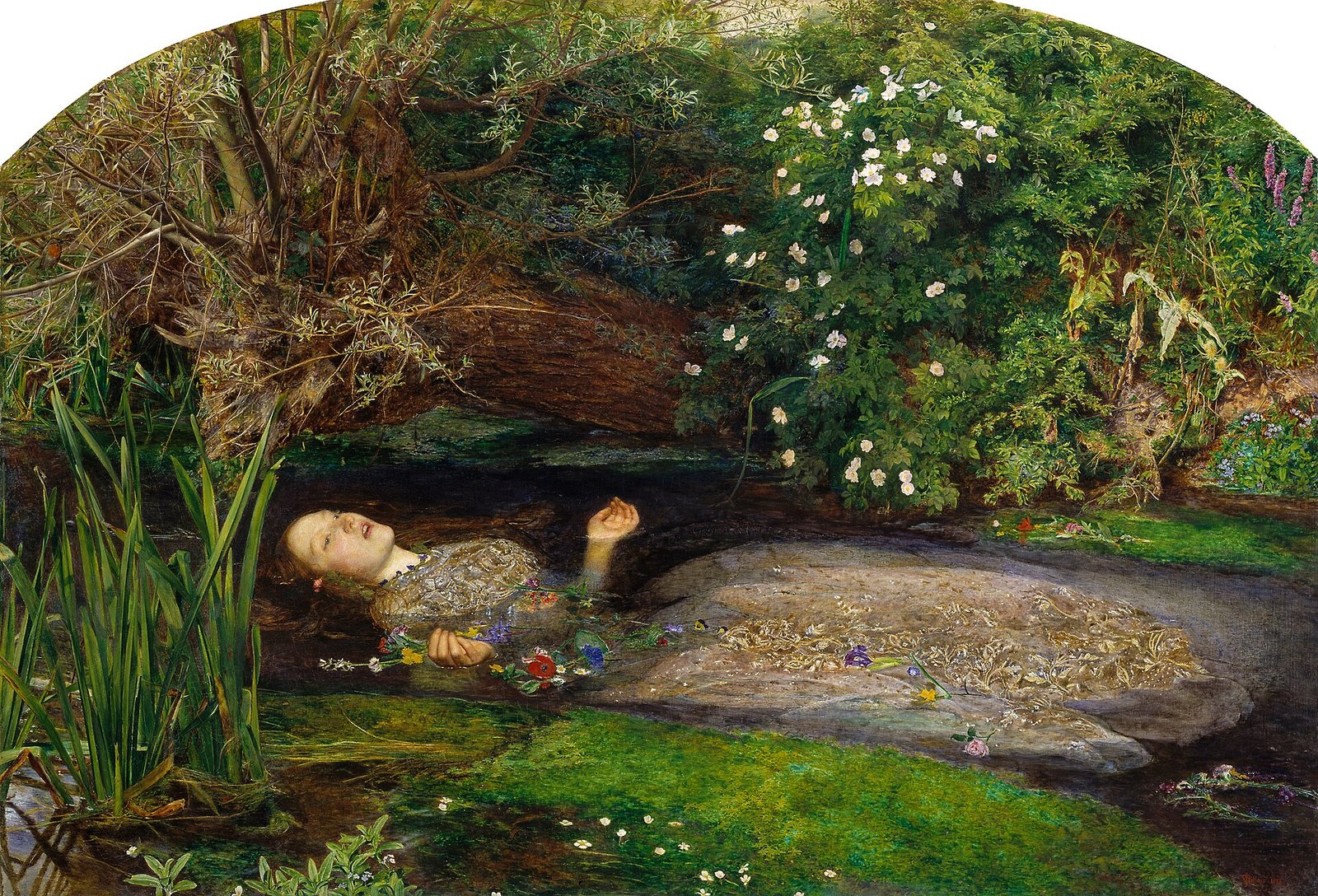
Ophelia, painted by John Everett Millais between 1851 and 1852, reimagines the moment when Ophelia, in Shakespeare's Hamlet, drowns after falling from a willow while gathering flowers. Millais chooses the instant of sinking: the figure drifts in a stream, arms open and face pale, and it is unclear whether she is already dead or has only just fallen. That ambiguity, along with the parted lips and the relaxed hands, conveys a calm yet unsettling melancholy. The artist paid close attention to botany. The landscape was painted from nature beside a river near Ewell, and each plant carries a meaning, such as violets, poppies, daisies or nettles, some named in Shakespeare's text and others added by Millais himself. The rich greens and the rounded upper edge of the canvas are features typical of early Pre-Raphaelite work. The painting is also famous for how it was made: the model, Elizabeth Siddal, lay in a bathtub so the artist could study the weight of the fabric and the movement of the water.
- Painter
- John Everett Millais
- Date
- 1851
- Medium
- oil paint, canvas
- Dimensions
- 112 × 76 cm
- Museum
- Tate, London
- Movement
- Pre-Raphaelite Brotherhood
- Genre
- history painting
- Depicts
- rose, daisy, suicide, bouquet, floating, Viola × wittrockiana, Papaver rhoeas, waist-length hair
More works by John Everett Millais