A Huguenot
John Everett Millais, 1852
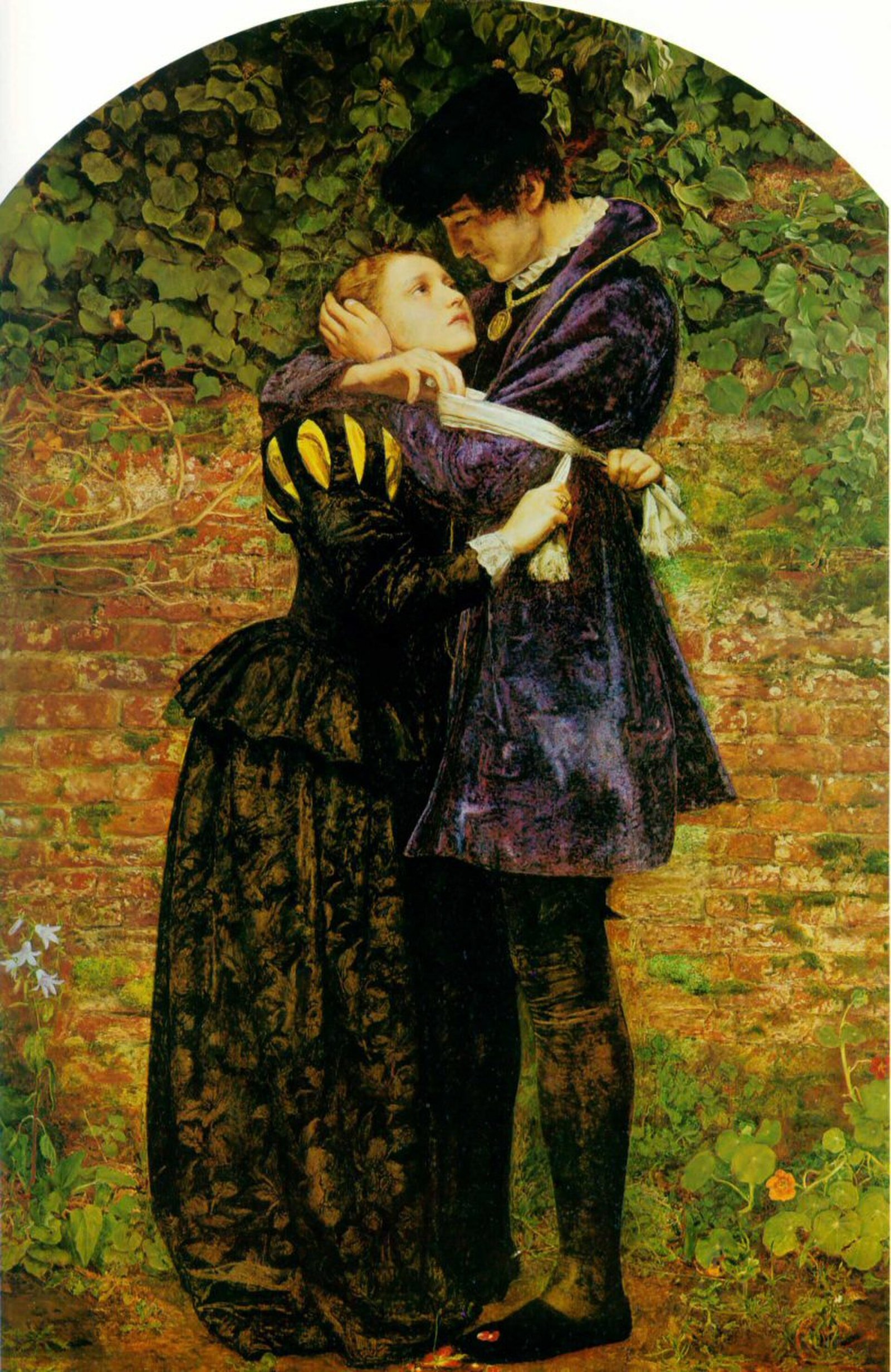
A Huguenot, on St. Bartholomew's Day shows a young couple caught in a moment of crisis. The woman, a Catholic, tries to get her beloved, a Protestant, to put on the white armband that marks loyalty to Catholicism. He firmly refuses it while embracing her gently and looking into her pleading eyes. The scene refers to the St. Bartholomew's Day Massacre of 1572, when thousands of French Huguenots were killed in Paris and other cities, and to the practice of wearing a white badge as a means of escape. Millais seems to have started from a milder situation and then redirected the picture toward this episode after seeing Meyerbeer's opera Les Huguenots, which presents a similar dilemma. The background, a brick wall beside a kitchen garden near Ewell, was painted outdoors, and the flowers may carry symbolic meaning within the so-called language of flowers. The figures were completed in London. Shown at the Royal Academy in 1852, the work helped change opinion about the Pre-Raphaelites and was widely successful as a print, encouraging Millais to produce further paintings on similar subjects.
- Painter
- John Everett Millais
- Date
- 1852
- Medium
- oil paint, canvas
- Movement
- Pre-Raphaelite Brotherhood
- Genre
- genre art
- Depicts
- Huguenots, Galanthus nivalis, garden, Capuchin, St. Bartholomew's Day massacre, standing, blond hair, couple
More works by John Everett Millais