The Blind Girl
John Everett Millais, 1856
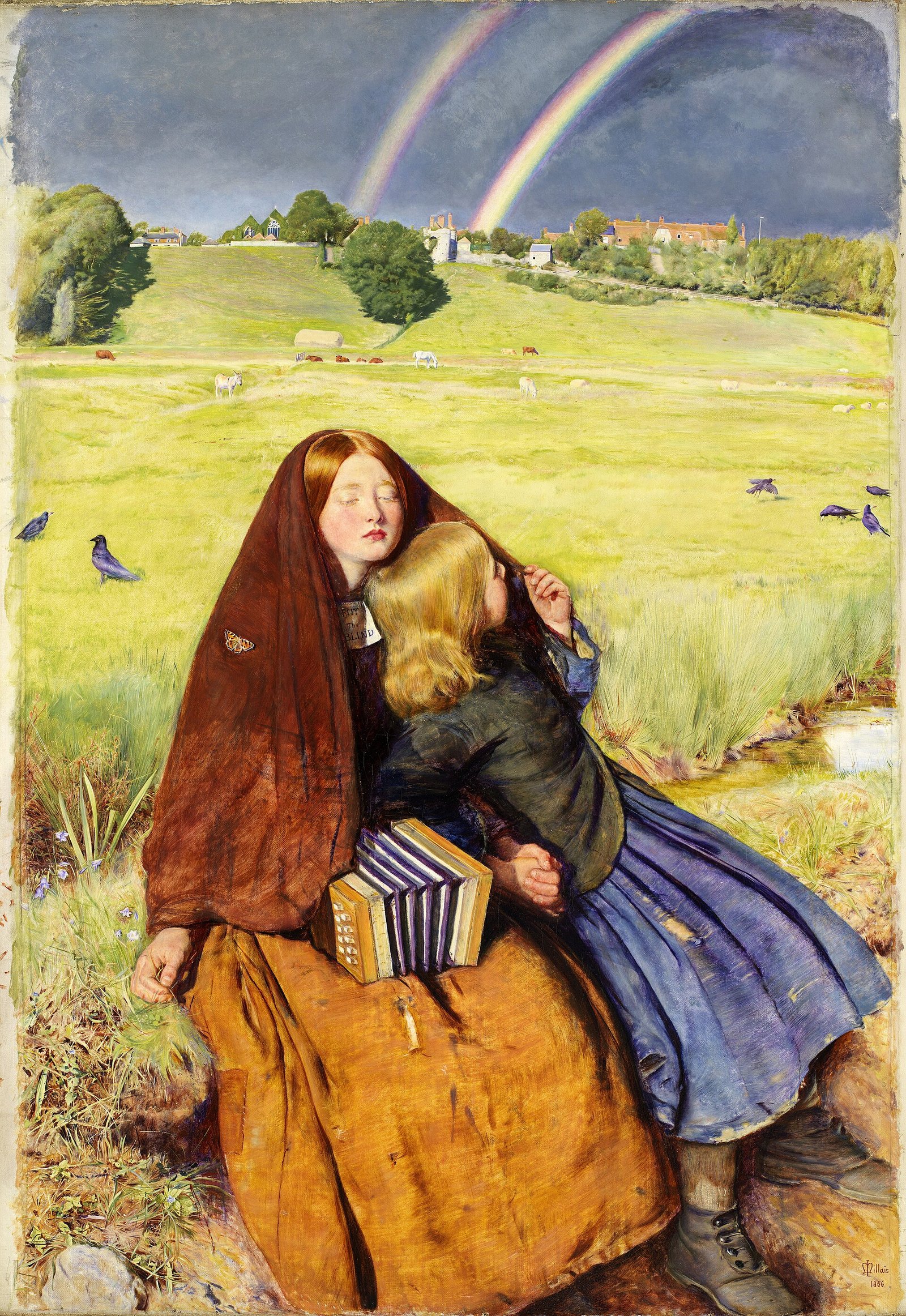
In The Blind Girl, Millais shows two poor women resting by a road after a rainstorm, probably sisters, on their way to the town of Winchelsea, just visible in the distance. The elder plays a concertina, and her blindness is conveyed less through narrative than through the way the picture divides the senses between the two. The blind sister feels the sun's warmth, breathes in the scent of the countryside and brushes a blade of grass; her sister, by contrast, shields her eyes with the shawl and gazes in surprise at a double rainbow that has just appeared. This contrast has led viewers to read the scene as an allegory of the senses, although some critics have seen in the rainbow a Biblical sign of hope. A detail reveals the painter's concern for accuracy: he first painted the colours in the same order in both arcs, then corrected them once he learned the secondary bow reverses the sequence. The butterfly resting on the shawl suggests stillness, an almost silent communion with nature, while the sign reading "Pity the Blind" points to the women's social condition. The painting is notable for combining optical precision, symbolic reading and a compassionate gaze on poverty.
- Painter
- John Everett Millais
- Date
- 1856
- Medium
- oil paint, canvas
- Dimensions
- 83 × 62 cm
- Museum
- Birmingham Museums Trust, Birmingham
- Movement
- Pre-Raphaelite Brotherhood
- Genre
- allegory
- Depicts
- Winchelsea, poverty, rainbow, blindness
More works by John Everett Millais