Venus and Adonis
Francisco Goya, 1771
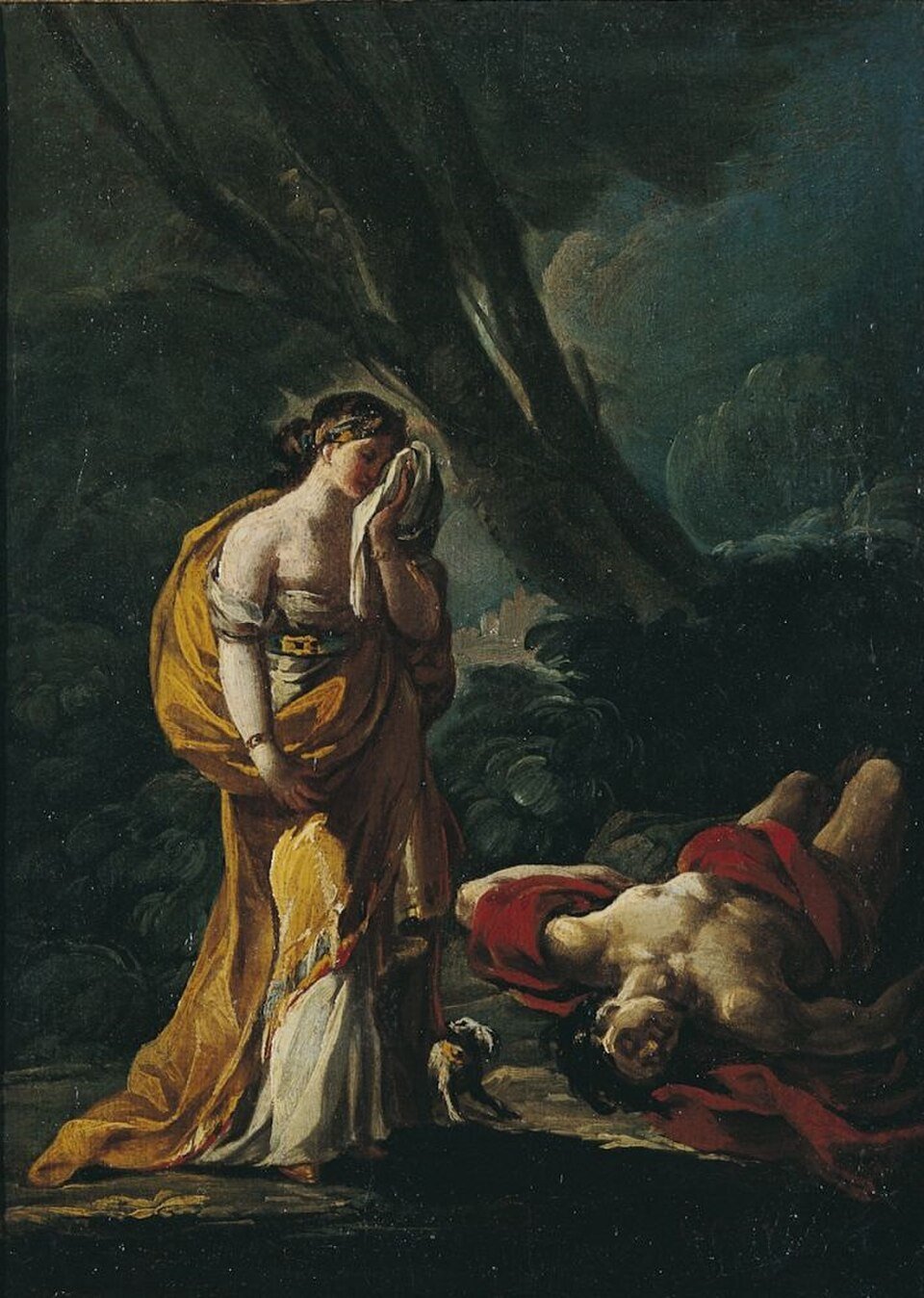
Venus and Adonis is an oil on canvas dated to around 1771, when Francisco de Goya was in Italy. The available source places it within his 1770 journey, a moment when the young and still little-known painter had not yet developed the personal style that would later make him famous. Unlike many artists who travelled with institutional grants, Goya had to pay for his stay abroad himself, a circumstance that shaped much of his work during those months.
While in Italy he produced several paintings on mythological subjects, and this canvas belongs to that group. These were small-format works executed with speed, intended to be sold quickly to bring in income. That context helps explain their modest scale and direct handling, closer to a commercial commission or studio exercise than to a composition meant for a large setting. The subject, the encounter between the goddess of love and the young hunter Adonis, belonged to the classical repertoire that many European painters cultivated, and Goya approached it within that tradition.
The painting is of most interest as a record of Goya's early years outside Spain. It shows an artist still learning how to move between the academic handling of classical myth and the practical need to produce saleable pictures. Its presence in the Museo de Zaragoza also links it to the city where the painter trained and spent much of his early career, though the consulted sources do not detail the later history of the panel or how it entered the collection.
- Painter
- Francisco Goya
- Date
- 1771
- Medium
- oil paint, canvas
- Museum
- Saragossa Museum, Zaragoza
- Genre
- mythological painting
- Depicts
- Adonis, Venus
More works by Francisco Goya


