The Body of Abel Found by Adam and Eve
William Blake, 1826
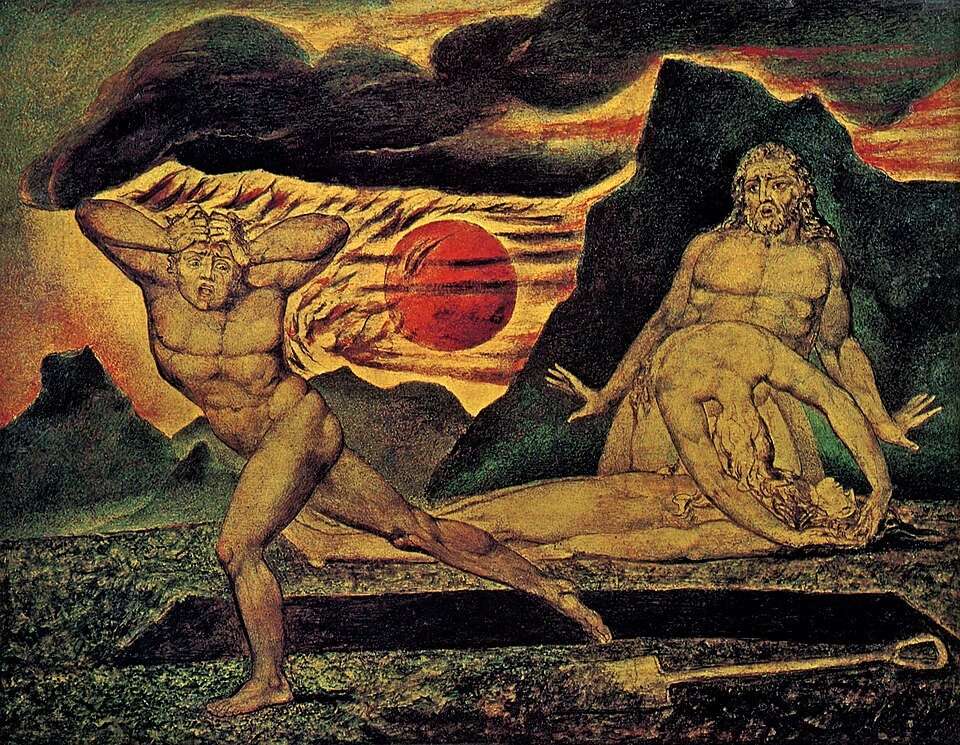
This small painting by William Blake, dated to around 1826, shows a moment from the biblical story that follows Cain's murder of his brother Abel. Adam and Eve have just found their son's body, and the scene packs the moment of discovery into a small space: Cain appears in flight, caught while trying to bury the corpse.
The emotional centre of the composition is Eva, bent over the body. Her posture recalls images of the Madonna dolorosa mourning Christ, a familiar iconographic model in European painting. With this parallel, Blake turns a scene of family grief into an image of maternal sorrow and loss.
In material terms, the work stands out for its technique: it combines gold and tempera on a mahogany panel. The glint of the metal and the smooth wooden surface give the scene a precious, almost icon-like quality that suits its religious theme. Its modest size, about forty centimetres wide, invites the viewer to come close to read the gestures and details.
The piece is held at the Tate in London. Its interest lies mainly in the way Blake transforms a story from Genesis into a highly personal visual language, where narrative, iconographic reference and careful materiality come together.
- Painter
- William Blake
- Date
- 1826
- Medium
- gold, tempera, mahogany wood
- Dimensions
- 43 × 32 cm
- Museum
- Tate, London
- Genre
- religious art
- Depicts
- Cain, Abel, woman, corpse, Adam, Eve, man
More works by William Blake