The Conversion of Mary Magdalene
Paolo Veronese, 1548
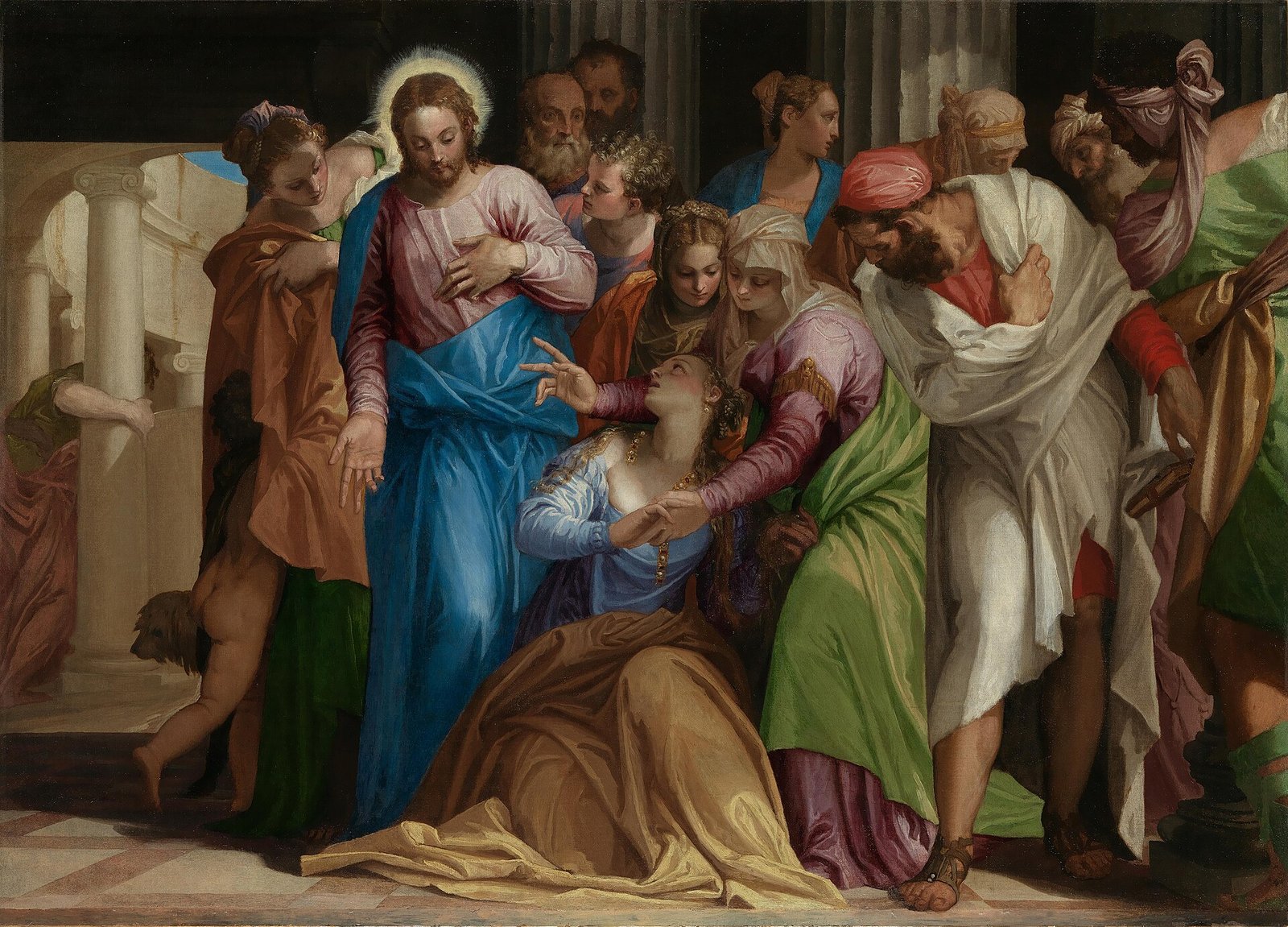
Veronese painted this scene while still a teenager, around 1545 to 1548, and it is one of the earliest surviving works by the Venetian-based artist. The picture shows an episode that does not appear in the Gospels or the Golden Legend, but rather in a tradition of the period that identified Mary Magdalene with the sinful woman mentioned in the Gospels and made her the sister of Martha. Today most Christians, including the Catholic Church, regard these as three different women. The subject is generally understood as the conversion of Magdalene, as told in Pietro Aretino's 1535 book, which circulated widely in northern Italy. The painting was probably commissioned by a noble patron in Verona.
The composition centres on Christ preaching in the Temple in Jerusalem. Mary Magdalene kneels beside him, turning her face towards him and flushing, while Martha stretches her hands towards them both. Veronese includes details loaded with meaning: Mary's low-cut dress recalls her former sinful life and looks out of place in a sacred building, and the necklace slipping from her neck suggests she is turning away from worldly things. The gesture is handled with restraint, without any need to underline it.
The work also reflects the painter's fondness for luxurious settings and shimmering garments, closer to Venetian high society than to humble religious imagery. When the Inquisition questioned this kind of licence, he replied that painters take liberties just as poets and madmen do, a remark that asserts the artist's freedom to decide how to portray his subjects. The painting has been in the National Gallery in London since 1876, when it was bequeathed by the collector Wynne Ellis.
- Painter
- Paolo Veronese
- Date
- 1548
- Medium
- oil paint, canvas
- Dimensions
- 118 × 164 cm
- Museum
- National Gallery, London
- Genre
- religious art
- Depicts
- Mary Magdalene
More works by Paolo Veronese